The Hero Artifact Series: Part 6 – The 1879 Anglo-Zulu War Lion’s Ledger: Engraved Zulu Cattle Horn.
There is a profound African proverb that echoes through the halls of history: “Until the lions have their own historians, the tale of the hunt will always glorify the hunter.”
Historical reconstructions of the 1879 Anglo-Zulu War have relied predominantly upon Eurocentric archives, military dispatches, and imperial illustrations. This article examines a monumental counter-narrative preserved within a highly restricted corpus of nineteenth-century material culture: incised Nguni cattle horns. With approximately twelve authenticated examples known to exist globally, these artifacts provide an unparalleled, indigenous visual record of the conflict from a native Zulu perspective. By analyzing the formal stylistic hallmarks, material significance, and socio-historical context of these horns, this study demonstrates how an anonymous Zulu master systematically documented the mechanics of colonial intrusion, creating a sovereign historical ledger that challenges conventional colonial historiography.
De-Centering the Imperial Archive
For nearly a century and a half, the geopolitical and martial landscape of the Anglo-Zulu War has been filtered through a Western lens. The experiences of the campaign were standardly codified in the leather-bound diaries of British officers, the romanticized sketches of London press correspondents, and the commemorative bronze monuments of the British Empire. This unilateral perspective has historically obscured the lived realities and observations of the sovereign indigenous populations.
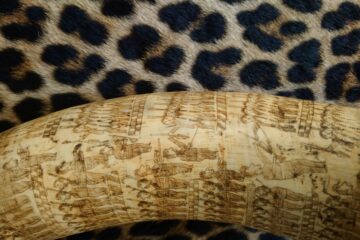
A critical corrective to this historiographical imbalance exists within a finite collection of finely engraved cattle horns, notably exemplified by the specimen documented at HillsCollectibles.com gallery. This corpus represents the earliest known narrative, figurative representational artwork produced by Zulu artists. Rather than conforming to static, Western-facing curio production, these pieces function as highly reliable, primary documentary records. They offer an uncompromised indigenous gaze directed outward at the expanding colonial apparatus during its most volatile mid-campaign threshold.
Methodology and Graphic Execution: The Mechanics of the Zulu Gaze
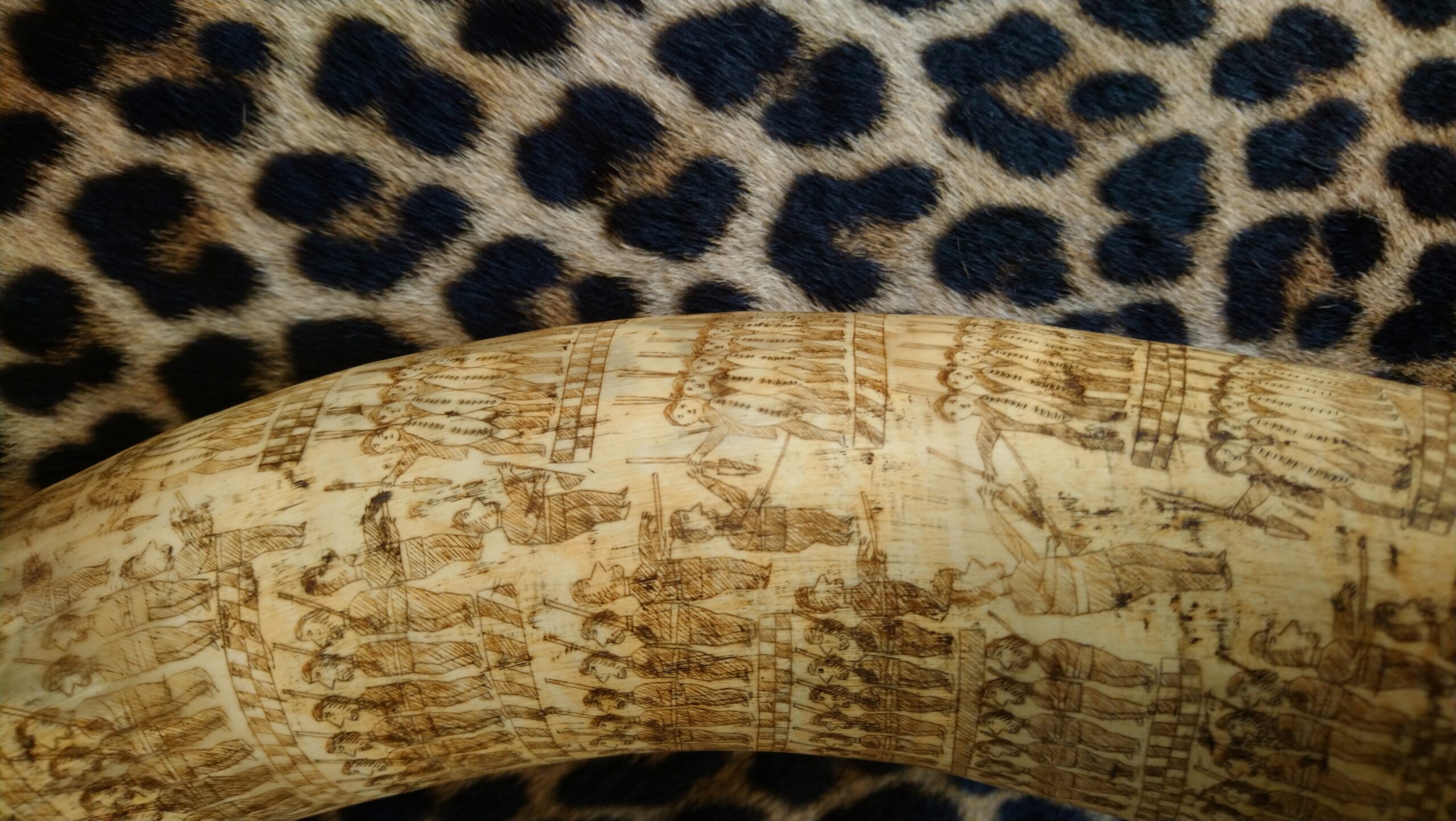
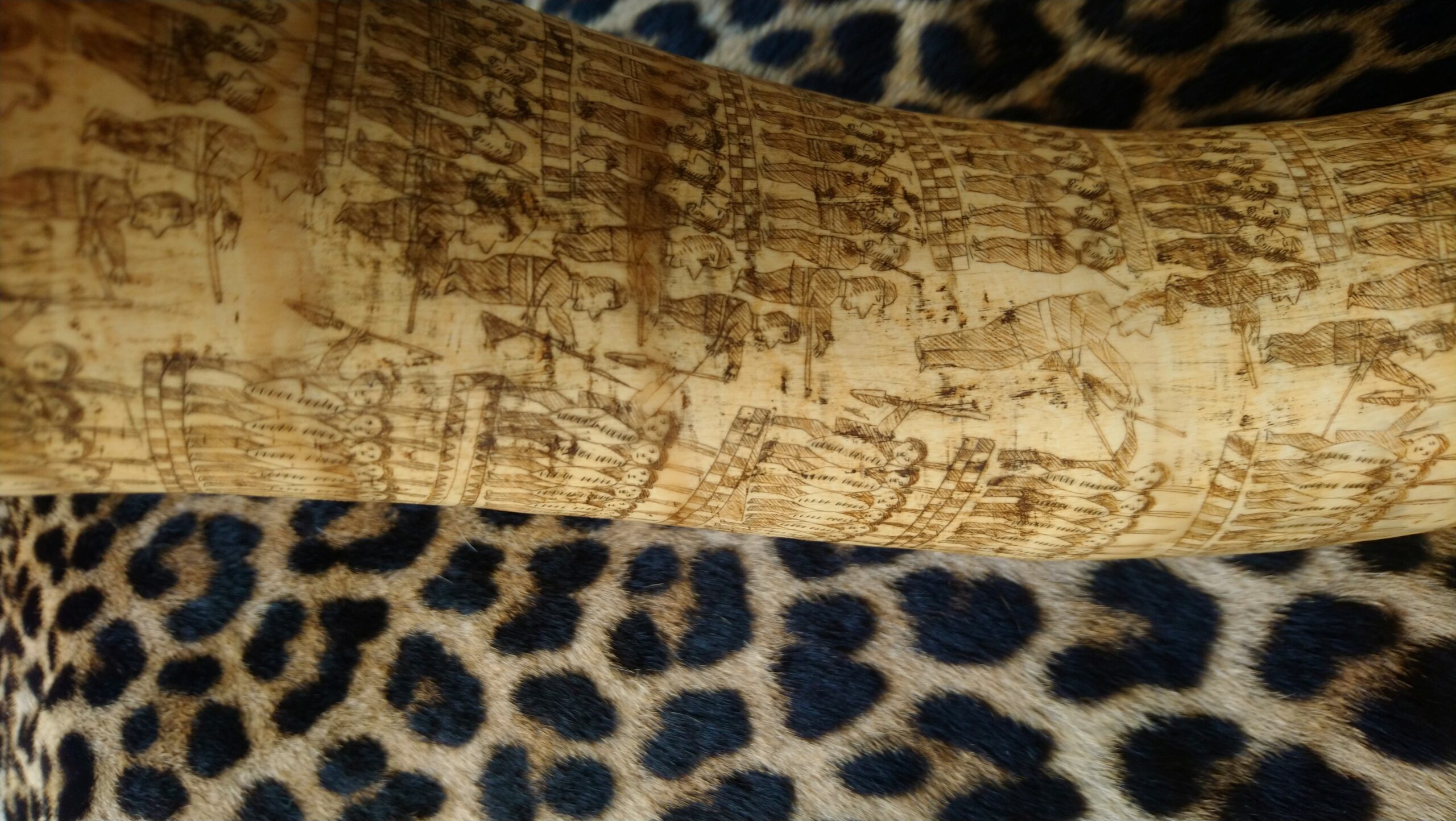
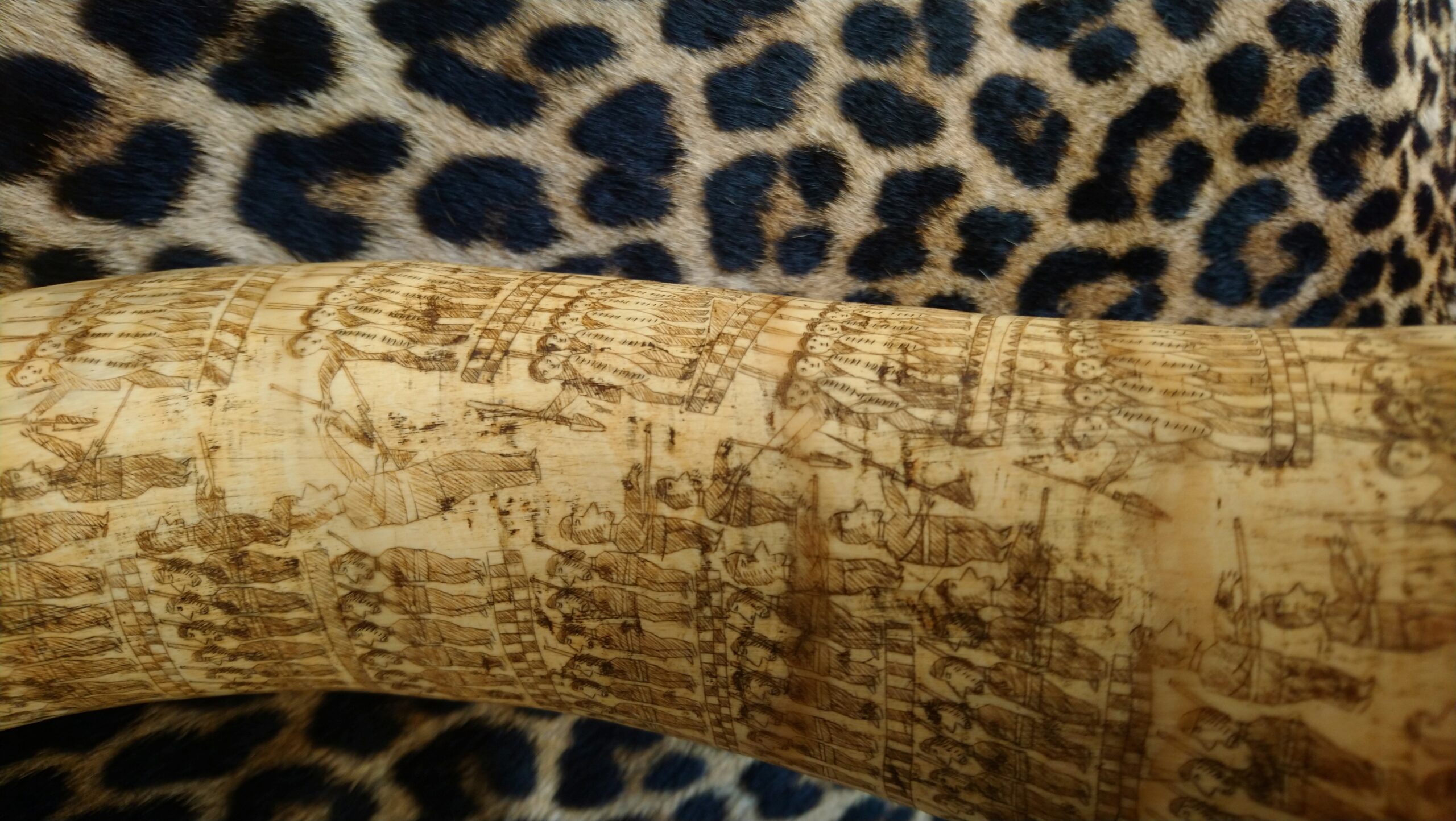
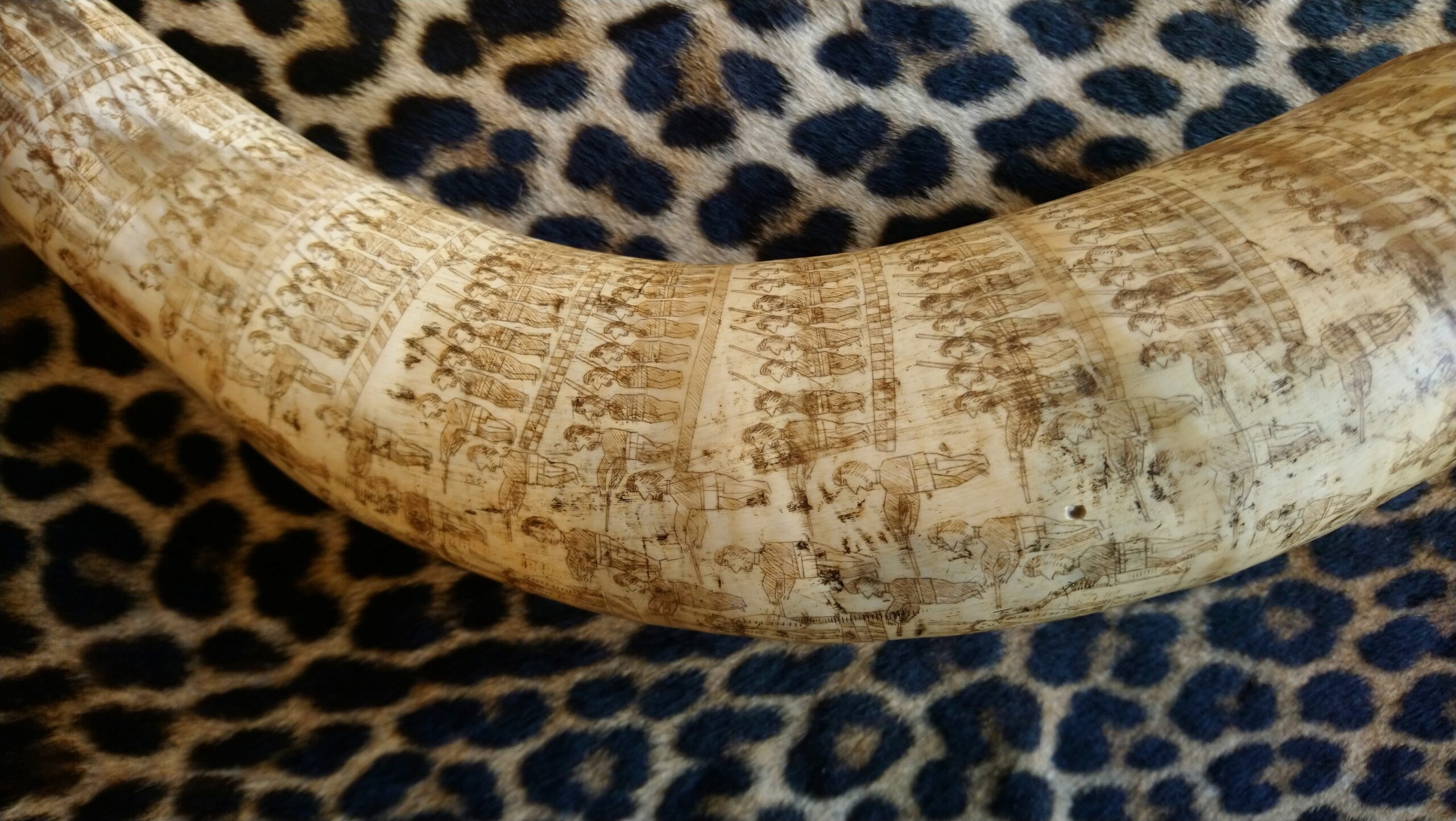
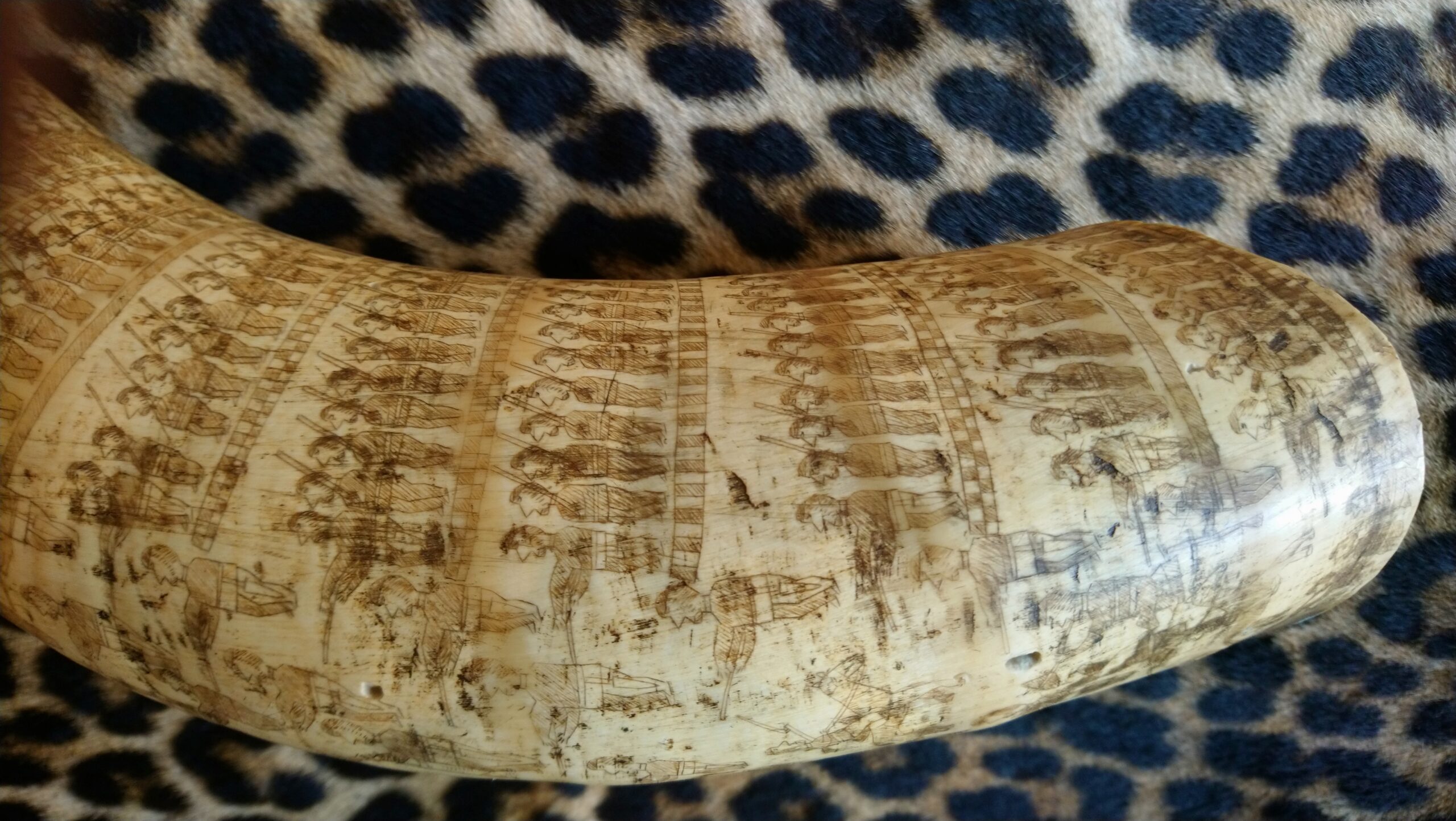
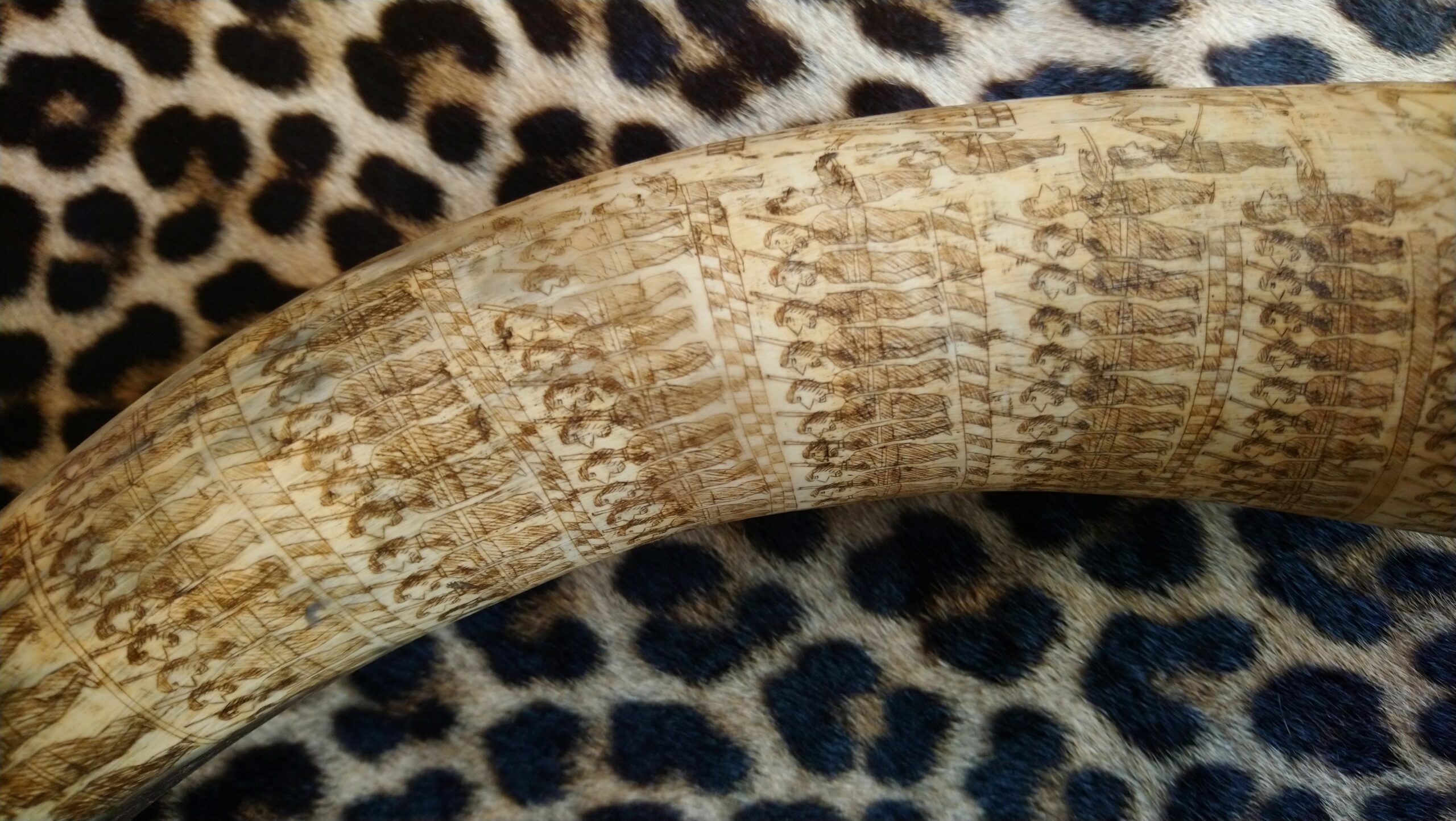
The production of these narrative horns reveals an advanced mastery of specialized graphic techniques adapted to ethnographic media. The anonymous artist; historically situated near the Newcastle district of Natal during the early 1880s prepared the raw canvas by scraping the natural outer layers of the horn to establish an exceptionally smooth, reflective surface. Using an ultra-fine iron blade or sharp point, the master incised dense, linear compositions directly into the keratin structure. To ensure optimal visual contrast and narrative legibility, the finely incised lines were subsequently blackened using a meticulous application of soot, fat, or charcoal.
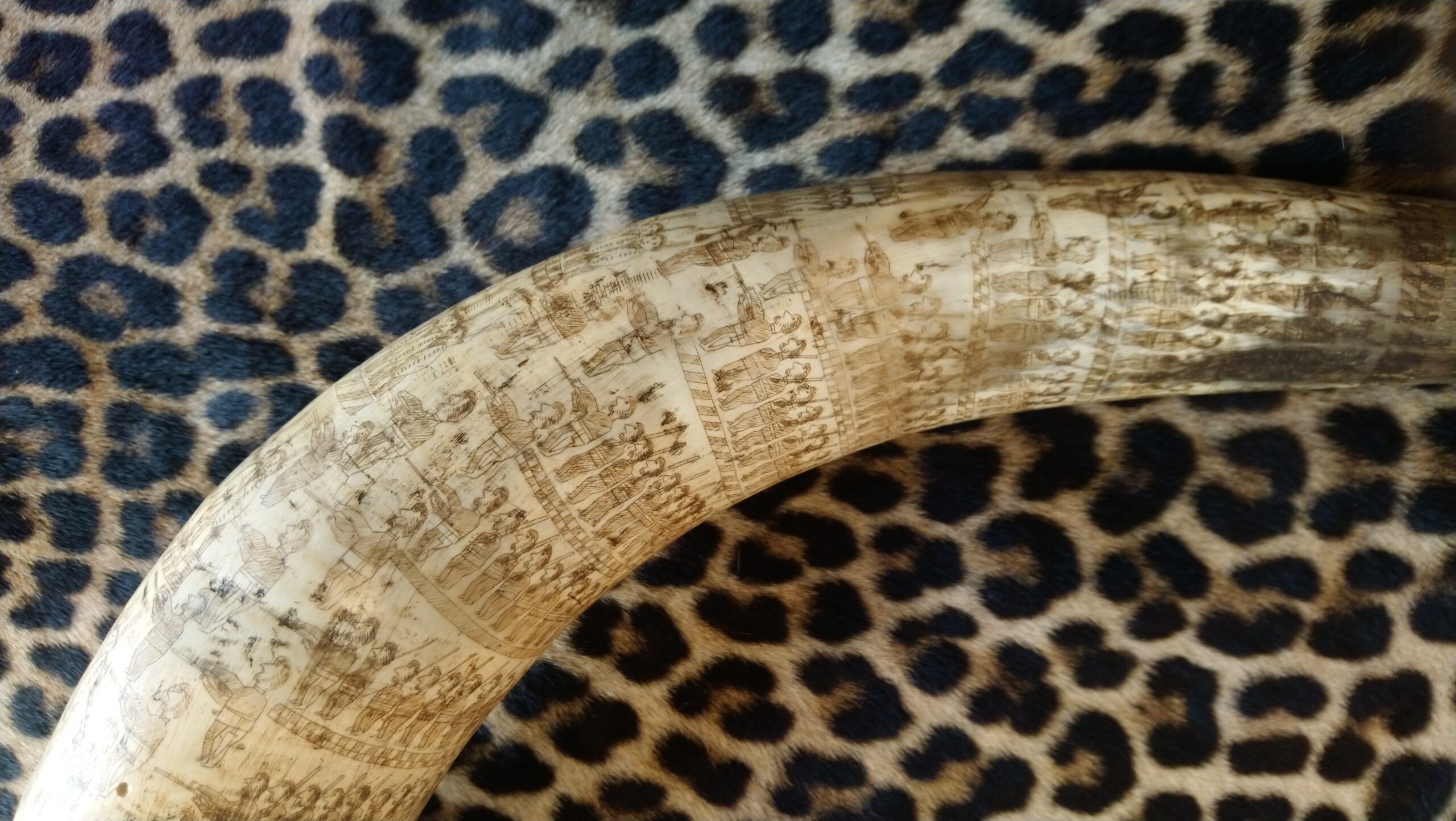
The structural composition of these artifacts forces a dynamic, multi-axial reading. Arranged in tight, horizontal bands bounded by cross-hatched or checkered registers, the narrative flows across the organic contours of the horn. This formatting requires the viewer to physically rotate the object, generating a kinetic, almost cinematic progression of historical events. Captured within these micro-etched registers is an extraordinary level of empirical observation: the rigid geometry of British redcoat infantry marching in formation, the precise configurations of horse-drawn artillery carriages and Gatling guns, and the coordinated positioning of Zulu amabutho (warriors) confronting imperial forces. It is a record of profound ethnographic realism, documenting the material realities of war with a level of accuracy that matches or exceeds contemporary Western sketches.
Material Significance: The Sacred Value of the Canvas
To fully comprehend the historical gravity of this artifact, it must be evaluated within the socio-spiritual framework of traditional nineteenth-century Zulu society. Among Nguni populations, cattle (izinkomo) were not merely economic commodities; they constituted the literal axis of the social, political, and spiritual universe. Cattle served as the ultimate markers of aristocratic status, the physical manifestations of societal well-being, and the vital conduits through which living descendants communed with ancestral spirits (amadlozi).
The deliberate selection of a prominent Nguni cow horn (as illustrated) as a historical parchment was an act of profound cultural consequence. By carving directly into an object infused with ancestral reverence, the artist elevated a transient military encounter into a permanent, sacred chronicle.
The forensic markers of this indigenous authorship are instantly recognizable across the authenticated corpus:
- Meticulous Regimental Differentiation: As evidenced by the engraved horn, the artist explicitly distinguished between various imperial units, documenting specific uniform details ranging from tropical helmets and Scottish Glengarry caps to the unique naval attire worn by the Royal Marines Brigade during strategic river crossings.
- The Artist’s Stylistic Signature: A key diagnostic feature of this master’s hand is the highly specific rendering of the Zulu oval shields (izihlangu), which are consistently depicted with a singular, prominent row of central lacing. While actual combat shields utilized double rows of lacing to secure the central wooden staff, the artist’s reduction of this feature to a sharp, stylized single line operates as a deliberate graphic signature, distinguishing his work from all other contemporary carvers.
Market Scarcity: The Ultimate Ethnographic Benchmark
Within the international spheres of fine ethnographic art, institutional curatorship, and high-stakes antiquities collecting, the market valuation of these narrative horns is anchored by absolute, unassailable scarcity. The entire global corpus remains extraordinarily finite, with roughly twelve verified specimens known to have survived the colonial period. The vanishingly small number of sister pieces are preserved as irreplaceable national treasures within premier international repositories, including the permanent collections of the British Museum in London, the Smithsonian Institution in Washington D.C., and the Iziko Museums in Cape Town.
When an object unites bulletproof academic provenance, extreme material rarity, and the unmediated historical voice of a sovereign indigenous master, its position at the apex of global material culture is secure. This engraved horn transcends the classification of a simple artifact; it is an irreplaceable foundational document of human history the definitive truth of 1879, recorded finally by the sovereign voice of the Zulu nation.
Scholarly Repository & Foundational Sources
- Maggs, T. 1990: “A glimpse of colonial life through Zulu eyes: 19th century engraved cattle horns from Natal.” Natal Museum Journal of the Humanities, 2: 143-162. The foundational academic treatise that first brought this corpus to light, identifying the techniques, structural compositions, and profound historical importance of these narrative engravings.
- Davison, P. 2005: “Visual Narratives of the Anglo-Zulu War.” Iziko Museums of Cape Town. This critical text maps the international distribution of the 12 known horns, detailing their manufacturing context near Newcastle for the 1886 Colonial and Indian Exhibition in London, and establishing their museum-grade institutional provenance.
- The British Museum Department of Africa, Oceania, and the Americas: Holds primary comparative reference pairs (e.g., Accession No: Af1960,08.1.a-c), providing the crucial forensic baseline for verifying 19th-century Nguni horn scraping, fine-line incising, and period-correct military iconography.
Image Asset Notice: The primary feature image, illustrating the exceptional fine line-work, historical narrative registers, and rich natural patina of this sovereign African treasure, is provided courtesy of HillsCollectibles.com.