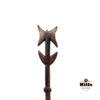
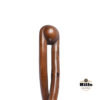
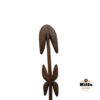
Masterpiece of Southern African Prestige: Exceptional Honeycomb Faceted Knobkerrie (Iwisa)
In the elite material culture of 19th-century Southern Africa, a staff or club was rarely a mere weapon—it was an extension of the owner’s status, ancestry, and social authority. This exceptional prestige knobkerrie (iwisa) is a breathtaking example of that tradition. Defined by its intensely labor-intensive, multi-faceted “honeycomb” head, this piece is a testament to the supreme mastery of an anonymous master carver, blending defensive utility with high-art sculptural geometry.
Visual Breakdown
The Honeycomb Head
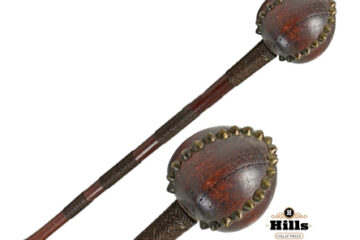
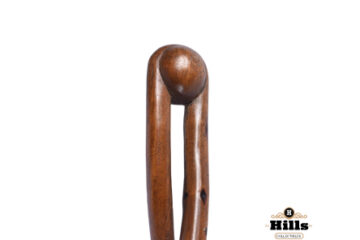
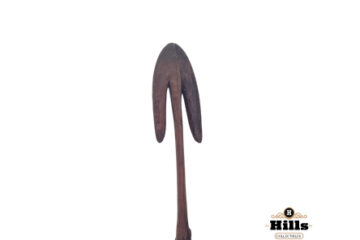
The defining characteristic of this iwisa is its beautifully proportioned, asymmetrical, flattened-spherical head. Rather than a standard smooth finish, the carver painstakingly chiseled dozens of interlocking, polygonal facets across the surface.
- The Pattern: The resulting “honeycomb” motif creates a striking interplay of light and shadow, highlighting the shifting grain tones of the indigenous hardwood.
- The Patina: The honey-brown and deep mahogany undertones reveal a rich, authentic, decades-old handling patina, with soft wear on the edges of the facets showing genuine age and ritual or ceremonial use.
Shaft and Construction
The full-length perspective reveals the superb balance and elegant geometry of the entire weapon:
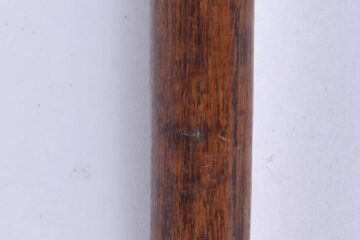
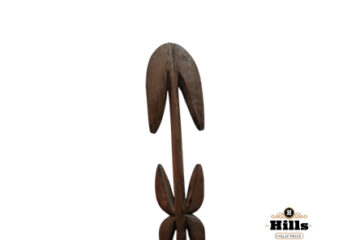
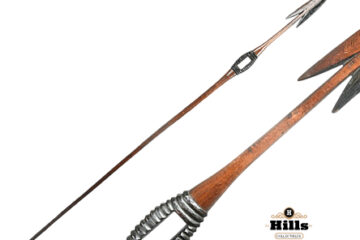
- The Silhouette: The shaft features a subtle, intentional, elegant curve that tapers gently down from the head before flaring out slightly at the terminal base to ensure a secure grip.
- The Collar: Just below the head, is a dark, contrasting structural band or collar. This feature historically served a dual purpose: reinforcing the high-stress junction where the head meets the haft, and adding a distinct visual counterpoint to the warm tones of the wood.
Cultural & Historical Context
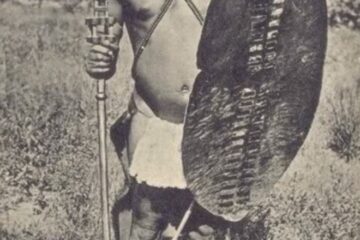
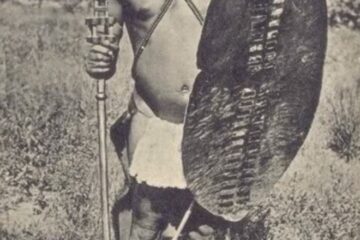
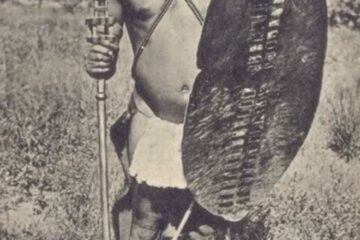
While standard smooth-headed knobkerries were carried widely across Zulu, Xhosa, and neighboring Nguni-speaking groups for hunting and personal defense, heavily faceted or paneled examples were explicitly reserved for individuals of high standing—chiefs, indunas, or distinguished warriors. The honeycomb faceting required extraordinary patience, geometric foresight, and specialized iron tools to execute symmetrically without splitting the dense hardwood.
Items exhibiting this level of virtuosity were proud prestige symbols, brandished during dances, regional gatherings (imbizos), and diplomatic encounters to command respect before a single word was spoken.
Condition & Attributes
- Material: Fine Southern African indigenous hardwood (likely ironwood or wild olive).
- Workmanship: Exquisite hand-chiseled honeycomb faceting; perfectly balanced, naturally tapered shaft.
- Condition: Excellent historical state. Showcases an authentic, deeply saturated surface patina with minor, honest signs of field wear and handling scars that elevate its character. No structural compromises.
For Connoisseurs
For collectors of premier African art, weapons of prestige, or weapons of high aesthetic merit, this honeycomb iwisa checks every box. It transitions seamlessly from a formidable ethnographic artifact to an object of striking modern geometric sculpture. A true “hero artifact” ready for exhibition or prominent gallery display.