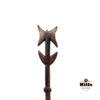
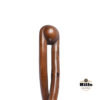
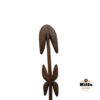
Exceptional Zulu Prestige Knobkerrie (Iwisa) with Fluted Head & Spiral-Carved Shaft
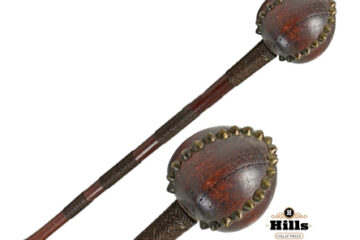
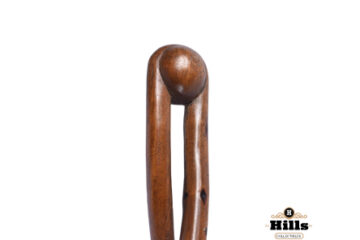
An extraordinary and highly tactile example of a classic Zulu prestige staff (iwisa / knobkerrie), beautifully hand-carved from deep, dense African ironwood (Olea europaea subsp. cuspidata or similar native hardwood). Boasting a striking, architectural form and a warm, honey-and-chocolate patina, this piece is a testament to the supreme skill of a master early 20th-century Nguni woodcarver.
Product Highlights
- Origin: KwaZulu-Natal, South Africa
- Date: Early 20th Century
- Material: Carved Hardwood (Ironwood)
- Dimensions: Length approx. 80 cm
- Provenance: Private UK Collection / UK Market
- Condition: Excellent antique condition with a deep, naturally aged wear-patina; rich, original coloring with no significant cracks or compromises to the structural integrity.
Design & Craftsmanship
This particular knobkerrie is distinguished by two exceptionally rare and sophisticated design features that elevate it from a functional implement to a high-status piece of prestige art:
1. The Fluted, Flattened-Spherical Head
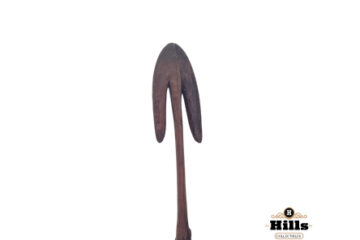
Unlike standard, smoothly spherical iwisa, the head of this staff features a flattened, melon-shaped (oblate) form. It is meticulously embellished with closely spaced, vertical fluted carving. This fluting catches the light beautifully, accentuating the natural grain of the ironwood and emphasizing the symmetry of the hand-carved head.
2. The Spirally Turned Shaft
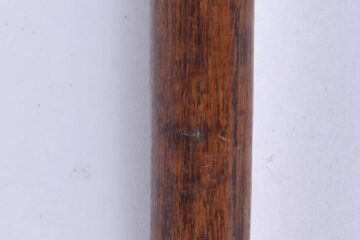
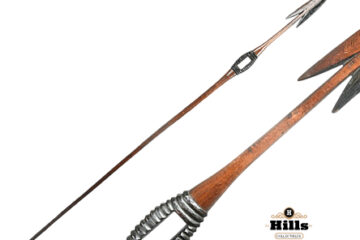
Descending from a short, smooth collar below the head, the entire length of the 80 cm shaft is carved with a continuous, tight spiral twist. This spiral carving is incredibly precise, adding both visual movement and an enhanced physical grip. The ridges of the spiral show a magnificent, smooth polish from generations of handling, contrasted by a darker, rich coloration in the recessed grooves.
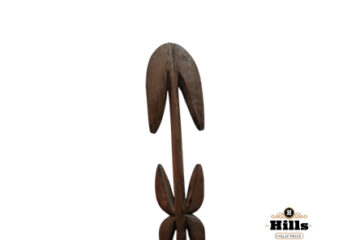
The staff tapers elegantly toward the base, which features a subtle, traditional pierce-hole (often used for a leather wrist thong) and a rounded terminal.
Historical & Cultural Context
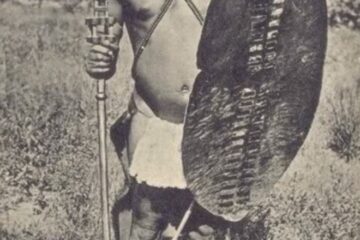
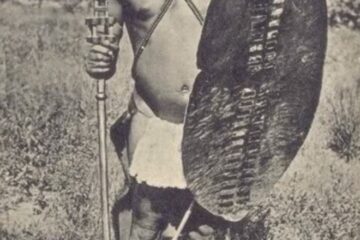
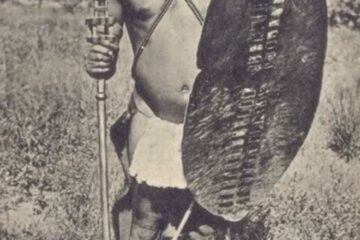
In the traditional Nguni and Zulu societies of South Africa, the iwisa (or knobkerrie) was far more than a defensive weapon; it was a profound symbol of personal identity, authority, and status.
While simple, unadorned clubs were carried by young men and warriors for hunting and everyday utility, highly stylized staffs like this fluted and spirally carved piece were reserved for chiefs, elders, and men of high social standing. Carved from carefully selected dense hardwoods (known for their heavy heft and resistance to splitting), these staffs were carried as prestige items during public gatherings, ceremonies, and court assemblies.
The immense labor required to carve deep, uniform fluting and a continuous spiral shaft by hand using basic iron tools made such a piece an immediate indicator of wealth and prestige. In the early 20th century, as traditional Zulu society navigated complex colonial transitions, these finely crafted staffs remained powerful emblems of ancestral heritage and personal dignity.
Collector’s Note
For collectors of ethnographic art and African weaponry, this knobkerrie offers the perfect trifecta: superb sculptural quality, a highly desirable wood type with an authentic historical patina, and a classic South African provenance. It displays beautifully as a standalone sculpture or as a centerpiece in a collection of Southern African prestige art.