Description
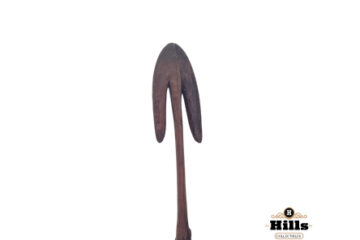
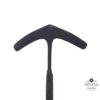
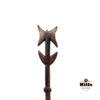
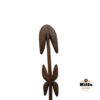
- Type: Zulu isiZenze (Crescent-bladed Battle Axe).
- Period: Late 19th to Early 20th Century.
- Provenance: United Kingdom market; documented.
- Materials: Forged steel blade, hand-carved indigenous hardwood haft.
- Measurements (Approximate): Overall Length: approx. 90–95 cm, Blade Span: approx. 22–26 cm.
Authentic Zulu Half-Moon Battle Axe (isiZenze)
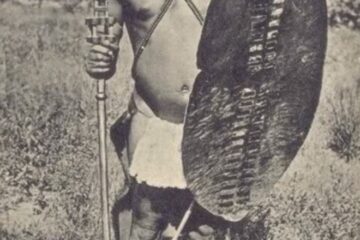
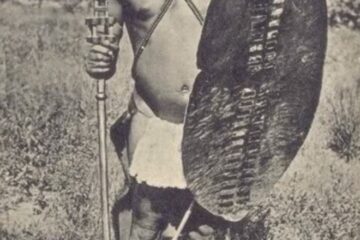
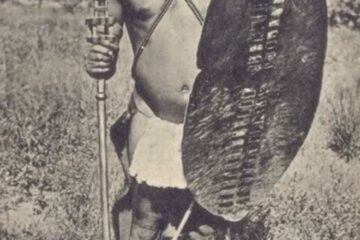
This impressive isiZenze is a classic example of Zulu martial and prestige weaponry. While the iklwa spear formed the core of Zulu combat tactics, the distinctive crescent-bladed axe served as a high-status symbol, traditionally carried by senior warriors, indunas, and chiefs to denote rank and authority.
Physical Attributes & Patina
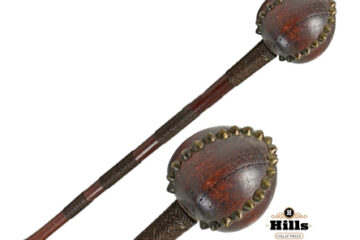
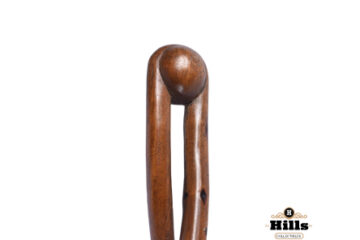
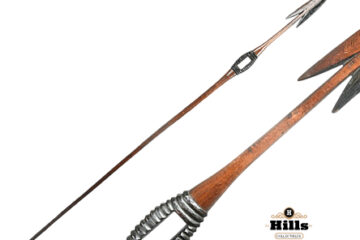
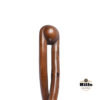
- Indigenous Hardwood Haft: Expertly carved from a single piece of dense South African hardwood. The handle displays a long, elegant taper that culminates in a beautifully flared butt (bulbous pommel) at the grip end — a characteristic feature enhancing balance, grip security, and visual prestige.
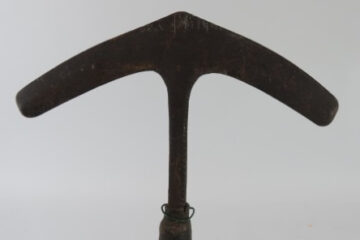
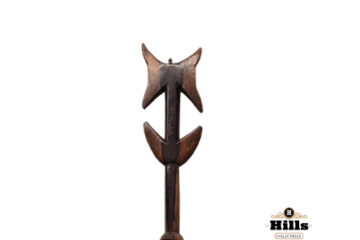
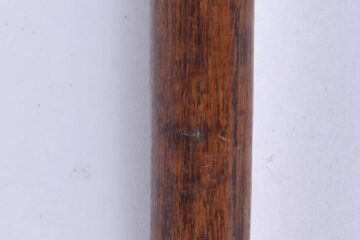
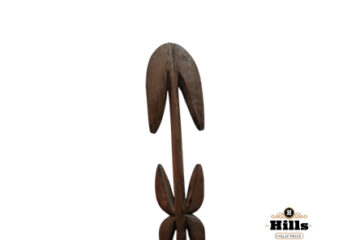
- Patina & Condition: The wood exhibits a deep, rich, lustrous dark patina developed over decades of handling and age, with subtle surface wear and minor nicks that attest to its genuine period use. The steel blade shows authentic age-related oxidation, a hand-forged texture, and a well-defined crescent profile with secure traditional hafting through the handle slot.
- Blade: Large, heavy half-moon (crescent) blade of substantial size, typical of high-quality examples from the Anglo-Zulu War era and immediate post-contact period.
Historical & Scholarly Context
This piece fits perfectly within the documented typology of transitional Nguni weaponry, where local blacksmiths skillfully adapted traded industrial steel into traditional forms. Such axes were both formidable weapons and powerful symbols of status within Zulu society.
Reference: Maggs, T. (1992). The Zulu battle-axe: Its origins and significance. Annals of the Natal Museum, 33(2), 175–187.