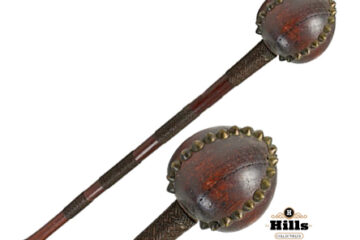
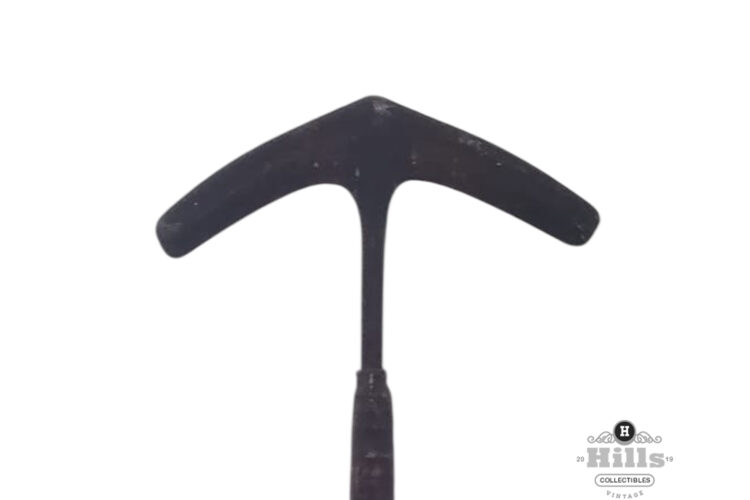
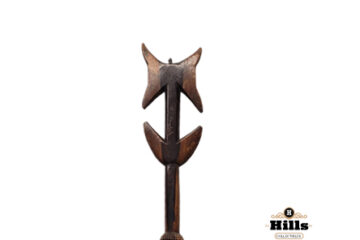
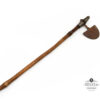
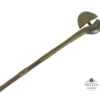
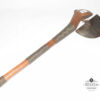
An Antique Zulu Crescent Battle Axe (isiZenze) with Fine Wire Binding
Description
- Type: Zulu isiZenze (Crescent-Bladed Battle & Prestige Axe)
- Period: Late 19th to Early 20th Century
- Provenance: United Kingdom market; private collection
- Materials: Forged iron/steel blade with straight neck, dark polished hardwood haft, multiple brass/copper woven wire bindings
- Measurements (Approximate): Overall Length: approx. 82–88 cm, Blade Width: approx. 20–24 cm
Antique Zulu Crescent-Bladed Battle Axe (isiZenze)
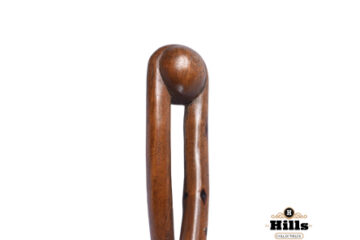
This classic Zulu isiZenze features a prominent semi-lunar blade set into a beautifully sculpted, hook-curved wooden head. Axes of this form were prized both as formidable close-quarters weapons and as symbolic items of prestige carried by established warriors and local leaders.
Physical Attributes & Craftsmanship
- Blade Architecture: The half-moon forged steel blade is mounted via a straight neck tang inserted directly into the hardwood head, with the upper tip resting securely against the curved crest. The blade surface displays authentic historic oxidation and handling patina.
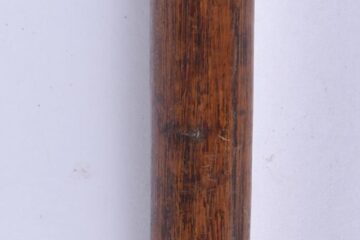
- Hardwood Shaft & Finish: Carved from a single piece of dense indigenous timber, featuring a smooth, dark-stained finish and an elegant forward-curving swollen head.
- Multi-Section Wirework: Accented with four distinct bands of tightly wound diagonal wire binding spaced along the upper neck, mid-haft, and base, securing the grip while highlighting high-status craftsmanship.
Historical Context
While spears such as the iklwa dominated battlefield tactics, the isiZenze occupied a distinct place in Nguni culture as both a lethal secondary weapon and a ceremonial marker of rank. The combination of multi-band wire binding and dark hardwood construction is characteristic of regional late 19th-century metalworking and woodworking traditions.
Reference:
- Spring, C. (1993). African Arms and Armor. Smithsonian Institution Press.
- Maggs, T. (1992). The Zulu battle-axe: Its origins and significance. Annals of the Natal Museum, 33(2), 175–187.