Origin: Zulu / Nguni Kingdom, Southern Africa
Period: 19-20th Century
Provenance: Ex-Private Collection, United Kingdom
Documentation & References: Published on TribalArt.com. Directly comparable to top-tier benchmark Nguni masterwork staves, including the famous Tsonga/Nguni Baboon Staff attributed to the Master of the Baboon Staff (Sotheby’s Collection Edric van Vredenburgh) and premier specimens from the celebrated Mick Woodfield Collection.
OVERVIEW
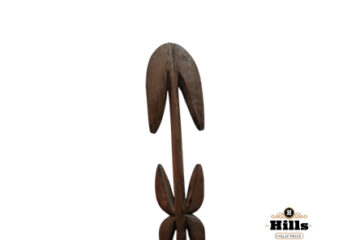
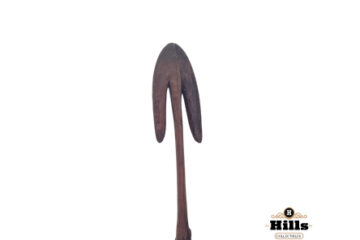
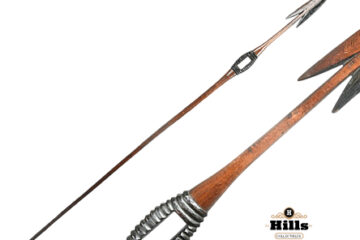
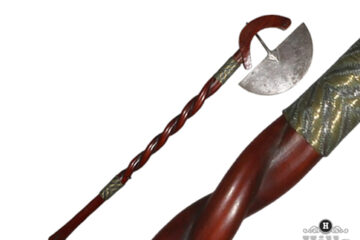
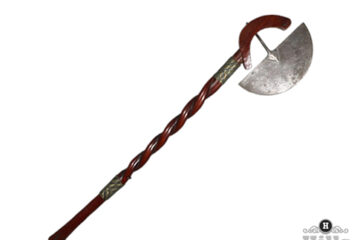
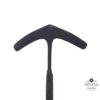
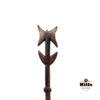
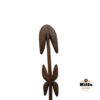
Representing the pinnacle of 19th-century Nguni courtly sculpture, this Zulu uNhlongweni Prestige Staff belongs to an exceptionally small corpus of high-status royal staves. Derived from the conceptual lineage of the iNhlendla, the uNhlongweni form is characterized by its double-tiered, opposing crescent barbs and pronounced central node work—a visual language indicating ultimate judicial rank (ubukhosi) within the Zulu hierarchy.
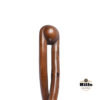
Executing such a complex, multi-tiered finial from a single, unbroken piece of dense indigenous hardwood required elite master carvers working under direct royal patronage. The addition of a raised, cross-hatched amasumpa (raised warts/pellets) sphere along the neck reinforces its sacred connection to royal cattle, wealth, and ancestral favor (Amadlozi).
AUCTION BENCHMARKS & AUCTION COMPARABLES
- The Sotheby’s Baboon Staff Parallel: This specimen shares sculptural authority, wood density, and refined micro-carving precision with the iconic Nguni/Tsonga staves sold at Sotheby’s (such as the Master of the Baboon Staff piece from the Edric van Vredenburgh collection). Both exhibit high-relief geometric detailing cut directly out of the timber’s primary axis.
- The Mick Woodfield Collection Standard: Comparable in form factor and surface chemistry to the finest Zulu staves dispersed through the renowned Mick Woodfield Collection, representing investment-grade Southern African tribal art.
- Published Media: Fully documented and analyzed on TribalArt.com.
ANATOMICAL & STRUCTURAL ANALYSIS
1. The Double-Barbed uNhlongweni Crown (The Apex)
- Opposing Swallow-Tail Architecture: The head features a dramatic, multi-tiered finial consisting of a curved crescent blade atop a secondary set of downward-pointing barbs.
- Monolithic Carving: Sculpted entirely from a single timber core, showcasing crisp geometric beveling along the interior barb wells.
- Striking Natural Two-Tone Contrast: Displays a magnificent, natural two-tone coloration, featuring a rich, dark central heartwood core flanked by lighter, warm honey-amber outer grain.
2. The Amasumpa Raised Node (The Nexus)
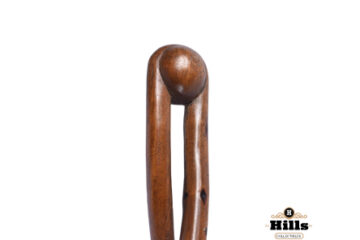
- Royal Relief Motif: Positioned along the upper shaft is a spherical carved node decorated with a raised grid of amasumpa (raised pellet/wart patterns). In Zulu royal iconography, amasumpa was reserved for high-status vessel carving (iphiwa) and royal regalia, symbolizing prosperity and cattle wealth.
- Tactile Handling Wear: The raised grid displays heavy smoothing and edge-rounding from decades of ceremonial handling.
3. Organic Shaft Contour & Surface Chemistry
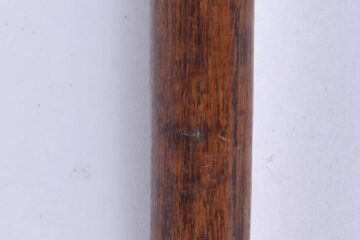
- Natural Living-Grain Curve: Features a subtle, organic shaft contour following the natural grain of the timber—an authentic feature of traditional Nguni staff making, not a defect.
- Wood Selection & Patina: Carved from dense indigenous ironwood (umSimbithi), showcasing natural longitudinal grain lines and a deep, hand-rubbed oil patina built up over a century of private UK preservation.