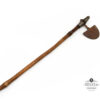
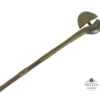
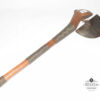
A Fine Zulu Wire-Bound Battle Axe (isiZenze)
Description
- Type: Zulu isiZenze (Wire-Bound Crescent Battle Axe)
- Period: Late 19th Century
- Provenance: United Kingdom market; private collection
- Materials: Forged steel blade, hand-carved hardwood haft, woven brass/copper wirework bands, integrated hanging loop
- Measurements (Approximate): Overall Length: approx. 80–85 cm, Blade Width: approx. 20–22 cm
Fine Zulu Crescent-Bladed Battle Axe (isiZenze) with Intricate Wirework
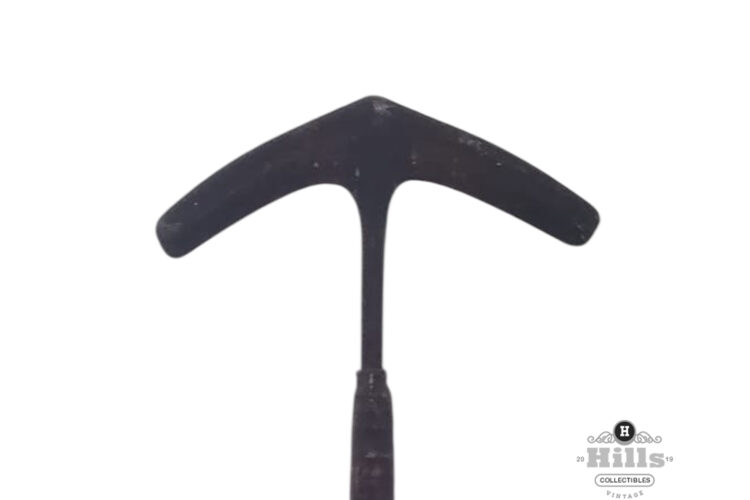
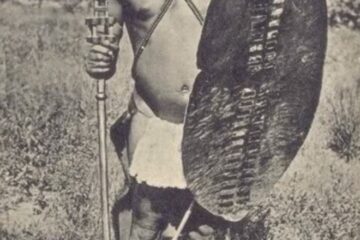
This high-status isiZenze is an exceptionally preserved example of Zulu prestige arms, featuring prominent decorative wire binding and a classic broad semi-lunar blade. Carried by leaders, indunas, and elite warriors, these axes served as powerful emblems of social standing and military distinction alongside their functional role in close-quarters combat.
Physical Attributes & Detail
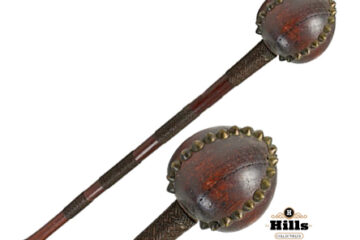
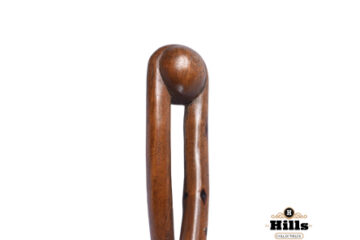
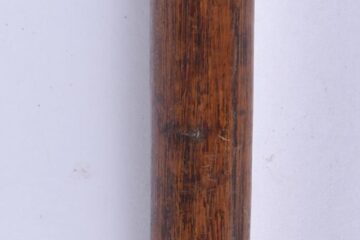
- Decorative Wirework: The shaft is embellished with three distinct sections of tightly woven, chevron-patterned metal wire binding (top neck, mid-haft, and butt-end), demonstrating high-level craftsmanship reserved for high-status individuals.
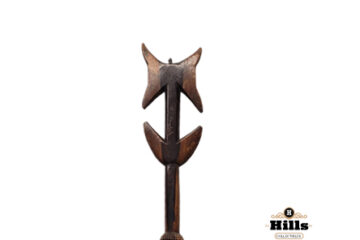
- Haft & Construction: Carved from a single piece of dense indigenous hardwood with a smoothed, angled head. The base terminates with a carved wooden end feature and a original hide or fiber loop.
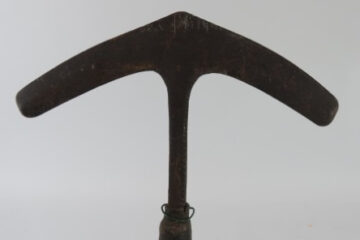
- Blade & Maker’s Mark: The large half-moon forged steel blade is anchored through the head via a forged tang. The blade face bears faint period maker/utility stamps, highlighting the integration of imported or re-purposed European steel into traditional Nguni weapon smithing.
Historical & Cultural Significance
The intricate wire binding on Nguni weapons served a dual purpose: reinforcing the wooden haft against splitting during shock impact while acting as a visual marker of wealth and rank. This example stands out for its well-preserved wire weaving and clear historical character.
Reference:
- Tyrrell, B. (1968). Tribal Peoples of Southern Africa. Books of Africa.
- Maggs, T. (1992). The Zulu battle-axe: Its origins and significance. Annals of the Natal Museum, 33(2), 175–187.