Home Blog African Tribal Art News The Prestige Zulu Spear Staff: A Symbol of Authority and Power
The Prestige Zulu Spear Staff: A Symbol of Authority and Power

The Prestige Zulu Spear Staff: A Symbol of Authority and Power

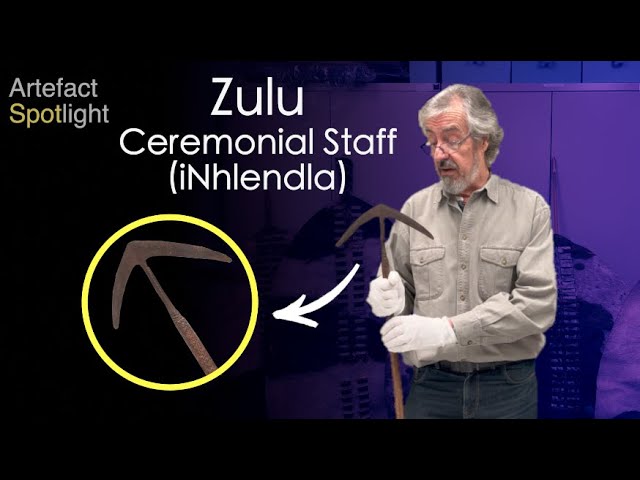
Prestige Zulu Spear Staff also known in Zulu as isagila somnumzane, is a ceremonial staff and was far more than a mere walking aid; it was a potent emblem of chiefly authority, carried exclusively by kings, chiefs, and select high-ranking individuals. Crafted with meticulous skill, these staffs blended functionality with symbolic depth, reflecting the Zulu people’s deep connection to their ancestors, nature, and societal hierarchy. Today, we’ll explore the history, design, cultural significance, and notable examples of this iconic artifact, drawing from historical accounts and museum collections.

Historical Context and Origins

The Zulu Spear Staff emerged within the broader tradition of prestige items in southern African societies, particularly during the 19th century when the Zulu kingdom under leaders like King Shaka and his successors reached its zenith. These staffs were part of a suite of regalia that distinguished rulers from their subjects, often used in public gatherings, ceremonies, and councils to assert dominance and command respect. Historical records indicate that such staffs were influenced by earlier traditions, including those involving rhino horn, but evolved to incorporate wooden designs mimicking spears to symbolize the chief’s power over life and death.

According to anthropologist A.T. Bryant in his 1949 work The Zulu People As They Were Before the White Man Came, this was considered a “Royal Weapon,” carried only by the chief and other such great men as he permitted. This exclusivity underscored the staff’s role in maintaining social order, where permission to wield one was a mark of favor and elevated status.

Design and Craftsmanship

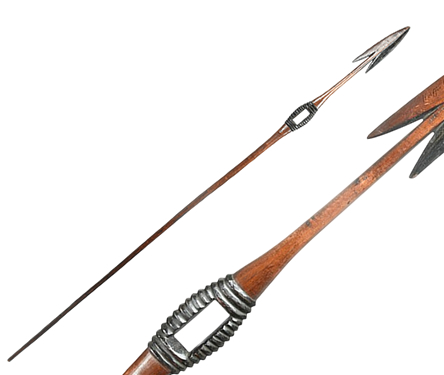
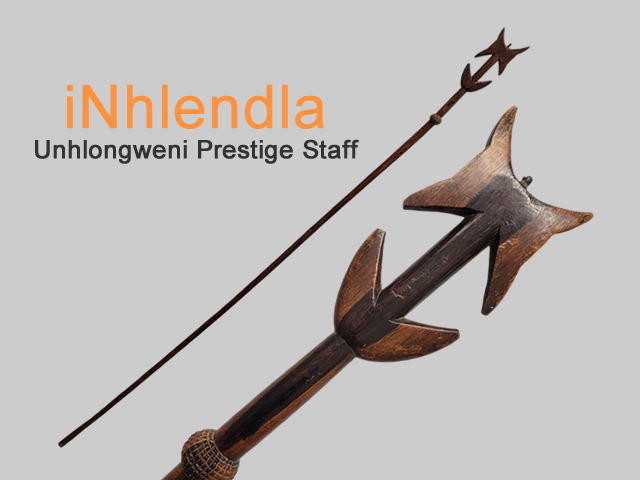
Zulu prestige spear staffs were typically fashioned from durable hardwoods like red ironwood or stinkwood, chosen for their strength and ability to hold intricate carvings. The design often featured an elongated shaft; sometimes exceeding 100 cm in length for visibility in crowds, topped with a elaborately carved head resembling a spear blade. This spear-like form was not intended for combat but served as a skeuomorphic element, evoking the lethality of actual weapons while emphasizing ceremonial purpose.

Key features included:

  • Length and Visibility: Staffs could measure up to 120 cm or more, termed unhlongweni or udlewedlewe if exceptionally long, allowing the chief to be seen from afar during assemblies.
  • Carvings and Motifs: Heads were delicately articulated, often with barbed or winged designs mimicking spear points. Snake motifs were common, symbolizing ancestral spirits and the chief’s supernatural strength.
  • Materials and Variations: While wood was predominant, some incorporated metal tips or emulated brass in their finish. Prestige variants were carried singly, distinguishing them from everyday tools.

These elements highlighted the artisan’s skill, with the staff’s form linking to Zulu cosmologies where symbols of power connected the living to the spirit world.

Cultural Significance and Symbolism

Beyond aesthetics, the Prestige Zulu Staff held profound symbolic weight. It represented the chief’s authority to govern, judge, and protect his people, embodying concepts of dignity, power, and ritual leadership. In Zulu society, carrying such a staff signaled the bearer’s right to command loyalty and enforce decisions. The spear motif, in particular, alluded to the chief’s role in warfare and justice, though these were non-functional for battle.

In scholarly analyses, such as Tim Maggs’ 1993 paper “The Zulu Battle-Axe” in the Natal Museum Journal of Humanities (Vol. 5), these staffs are described as wooden staves carved to resemble winged and barbed spears. Maggs highlights their prestige nature, noting examples that blend axe and spear elements in ceremonial contexts, reinforcing their role as emblems of elite status.

Notable Prestige Zulu Staffs from Collections

Several preserved examples offer insights into the artifact’s diversity:

  • British Museum Af1936,1015.1 (Most Comparable): This ceremonial spear staff, made of wood, measures 177.5 cm in height, 9.9 cm in width, and 3.5 cm in depth. Attributed to the Zulu people from the late 19th to early 20th century, it was found near the Tugela River in KwaZulu-Natal. Donated in 1936 by Miss Clayton (previously owned by Sir Frederick Clayton), it exemplifies the elongated, spear-like design typical of chiefly prestige items. Though not on display, it captures the essence of visibility and symbolism in Zulu leadership.
  • Other references, such as British Museum accessions Af674 and Af1982,32.35, are noted in historical contexts as similar Zulu staffs, though detailed public records are limited. These likely share features like carved spear heads and hardwood construction, further illustrating the artifact’s prestige.

Maggs’ Fig. 6 in his paper illustrates such staves from the British Museum (including 1936A.1015.1 and possibly others from the 1860s), describing them as prestige objects resembling barbed spears, used to denote high rank.

If you’re fascinated by African prestige artifacts, explore our collection of Zulu-inspired items or share your thoughts in the comments below. Stay tuned for more deep dives into tribal art traditions!

Add comment

Sign Up to receive the latest Updates and News

TribalArt.com © 1997-2026. All rights reserved. Terms of Use | Privacy Policy | Ethics & Compliance