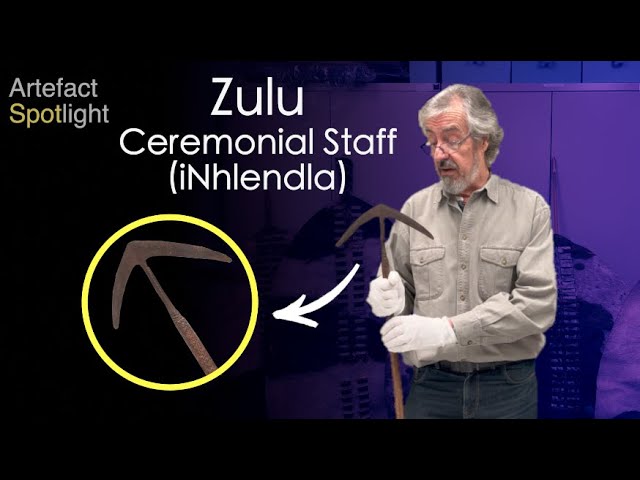
A Prestige Zulu Ceremonial Staff (iNhlendla)
In the heart of the 19th-century Zulu Kingdom, authority wasn’t whispered—it was wielded with elegance and intent. While the fearsome iklwa spear dominated the battlefield, the iNhlendla commanded respect in councils and ceremonies, serving as a silent proclamation of elite status. Drawing from historian Ian Knight’s insightful artifact spotlight on the “Clash of Empires” channel and archaeologist Tim Maggs’ detailed documentation in “The Zulu Battle-Axe” (1993), let’s explore the profound craftsmanship, symbolism, and cultural resonance of this remarkable ceremonial staff.
Design & Craftsmanship: Forged Elegance Meets Functional Symbolism
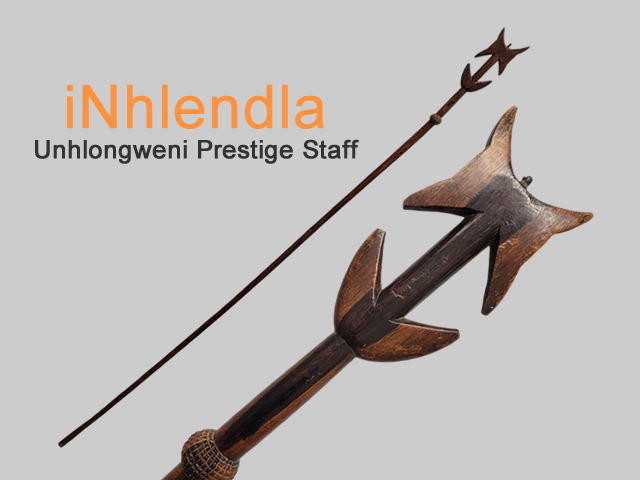
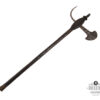
The iNhlendla stands apart from conventional battle-axes, embodying a fusion of artistry and authority. At its core is a slender, gracefully curved iron blade—thin and elongated, often resembling a stylized ax head but ingeniously embedded directly into the cleft end of a long, straight wooden shaft. This axial insertion transforms it from a weapon into a scepter-like staff, easy to carry upright as a mark of dignity rather than combat readiness. The blade’s curve evokes both the sweep of a predator’s claw and the arc of a royal decree, with a sharp, pointed tip that hints at latent power without overt aggression.
Tim Maggs’ archaeological analysis highlights the meticulous attachment techniques, which blended practicality with aesthetic flair, ensuring the blade’s secure holdwhile showcasing the smith’s skill. Drawing from the specific examples in Maggs’ figures (as illustrated), here’s a closer look at their variations:
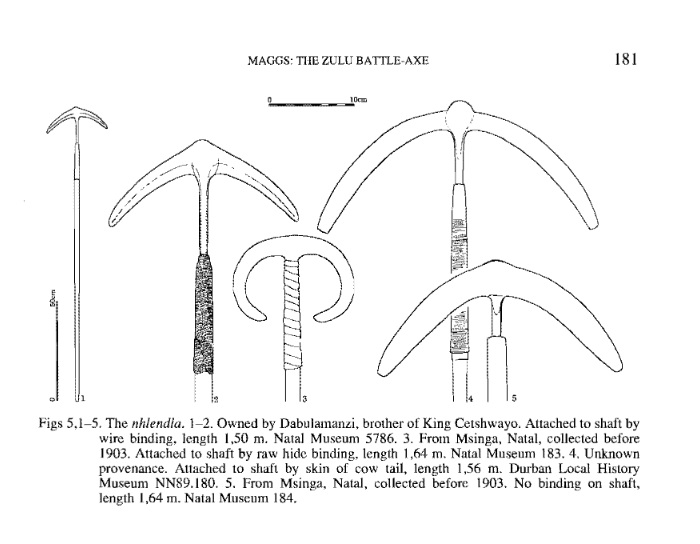
- Figures 1-2: Royal Wire-Bound Mastery – Owned by Prince Dabulamanzi kaMpande, brother of the legendary King Cetshwayo, this 1.50-meter staff exemplifies regal craftsmanship. The blade is fastened to the shaft using tightly coiled wire binding, a method reserved for high-status pieces. The wire, likely brass or iron, wraps in precise, overlapping spirals, creating a textured grip that gleams subtly in light. Collected before 1903 from Msinga in Natal (now housed in the Natal Museum under accession 5786), this piece’s balanced proportions—slender shaft tapering to a polished wooden base—underscore its role as a portable emblem of royal lineage.
- Figure 3: Rawhide Resilience – Sourced from Msinga, Natal, and archived in the Natal Museum (accession 183), this 1.64-meter variant features rawhide binding. Strips of untreated animal hide are wound around the blade’s tang and shaft, shrinking as they dry to form an unyielding, weather-resistant seal. The hide’s natural texture adds an organic, tactile quality, blending the raw essence of Zulu pastoral life with forged metal sophistication.
- Figure 4: Cow-Tail Skin Innovation – Of unknown provenance but preserved in the Durban Local History Museum (NNS9.180), this 1.56-meter staff uses skin from a cow’s tail for attachment. The supple, fibrous material is expertly laced and shrunk, providing a flexible yet durable bond that mimics the resilience of Zulu warriors. The shaft shows no additional adornments, emphasizing the blade’s minimalist curve as the focal point.
- Figure 5: Unadorned Purity – Also from Msinga, Natal, collected before 1903 (Natal Museum 184), this 1.64-meter example lacks visible binding on the shaft, suggesting a seamless insertion or hidden reinforcement. Its unembellished design highlights the blade’s inherent grace, with lengths averaging 1.5 to 1.64 meters overall, making it imposing yet manageable for ceremonial processions.
As Ian Knight aptly describes: “Essentially, it’s a very thin curved blade… stuck in the end of the stick so that you would carry it as a staff… a bit like a scepter.” These methods not only secured the blade but symbolized the unbreakable ties between leader and land, with materials like wire denoting prestige and hides reflecting communal resources.
A Declaration of Dominion: Symbolism in the Zulu Hierarchy
Far removed from the chaos of war, the iNhlendla was the ultimate insignia of influence—an “ID card” for the Zulu elite. Evolving from earlier traditions, including staffs crafted from rhino horn to symbolize a chief’s dominion over life and death, it became a wooden spear-mimic that projected unassailable power. Carried exclusively by:
Its presence demanded deference; as Knight notes, it was “a statement of fact: ‘Here I am, I’m somebody important.'” In the context of the Anglo-Zulu War (1879), such items underscored the kingdom’s structured hierarchy amid colonial pressures, blending martial heritage with diplomatic poise.
This legacy endures vibrantly today. Contemporary Zulu monarchs, such as King Misuzulu kaZwelithini, wield modern iNhlendla during events like the Reed Dance or royal installations—often forged from stainless steel or adorned with gold plating to merge tradition with modern prestige. In South African heraldry, it’s even featured in the Zulu royal arms as a symbol of the king’s sovereignty.
Why the iNhlendla Captivates Collectors and Historians
More than an artifact, the iNhlendla offers a portal into the Zulu Kingdom’s intricate social tapestry, where art, power, and identity intertwined. It exemplifies how functional objects transcended utility to encode hierarchy, much like prestige items in other African cultures. For collectors, its rarity and provenance (tied to figures like Cetshwayo) make it a coveted piece; for historians, it reveals the nuances of pre-colonial metallurgy and symbolism.
Intrigued? Share your thoughts on Zulu heritage below, what other symbols of authority fascinate you?