Time Period: 19th – 20th Century
Origin: Zulu Peoples, South Africa
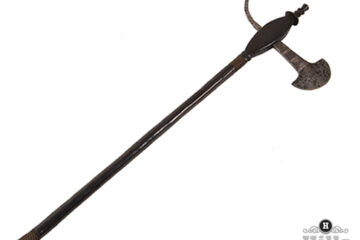
Materials: Forged iron blade, hardwood shaft, palm fiber binding
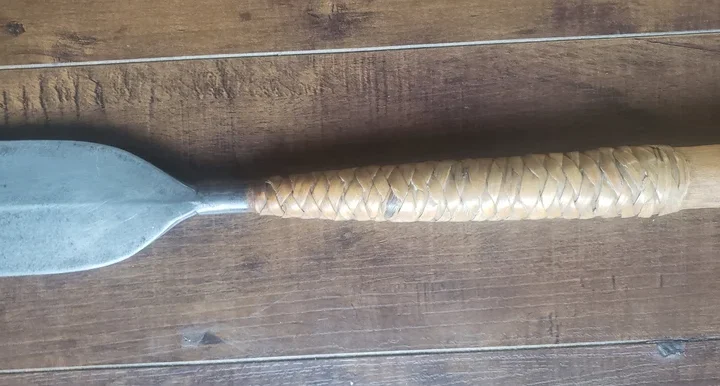
Measurements: Total ~46.5″ (118 cm) | Blade ~21″ (53 cm) long × 2″ (5 cm) wide
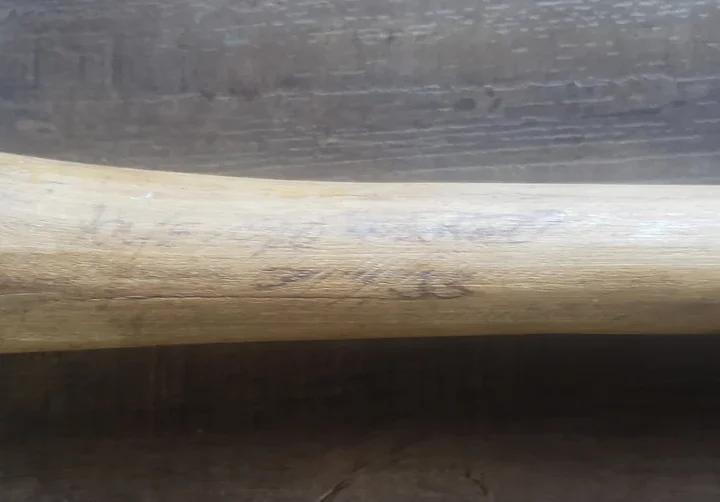
Provenance: UK Market, Provenance documented. Inscription: “Schnoodles and Pigdog” (owner marks)
Condition: Excellent original condition; minor age-related tarnish and faint scratches only
Zulu Iklwa Stabbing Spear – Shaka’s Close-Combat Masterpiece
Designed by the legendary King Shaka Zulu (c. 1787–1828), the iklwa replaced traditional long throwing spears with a short, heavy stabbing blade that forced warriors to fight shield-to-shield. Its name echoes the wet “iklwa” suction sound made when pulled from a fallen enemy. This exact pattern dominated the Anglo-Zulu War (1879), helping Zulu impis annihilate a British column at Isandlwana and held Rorke’s Drift against overwhelming odds.
A Weapon of the “Buffalo Horns”
The Iklwa was the “teeth” of Shaka’s famous Buffalo Horns formation. While the “chest” of the army pinned the enemy down, the “horns” would sprint to encircle them. Once trapped, the Zulu warriors would close the gap, using their large cowhide shields to hook the enemy’s shield aside, exposing the torso for a fatal thrust from the Iklwa.
Why Collectors Prize It
An authentic Zulu Iklwa is more than an artifact; it is a masterpiece of functional design.
-
The Blade: Typically 12 to 14 inches of hand-forged carbon steel, broad and leaf-shaped. It was designed to create a massive wound channel, ensuring a single thrust was decisive.
-
The Haft: Crafted from heavy, durable hardwoods like umzane (ironwood). Unlike the smooth handles of ceremonial pieces, a true combat Iklwa features a flared, bulbous, or “swallow-tail” butt. This wasn’t just for aesthetics; it was a life-saving necessity. In the chaos of the Buffalo Horns formation, the haft would quickly become drenched in blood and sweat, making it nearly impossible to hold. The flared end acted as a physical stop, ensuring the warrior’s hand wouldn’t slip off the weapon during a forceful extraction.
-
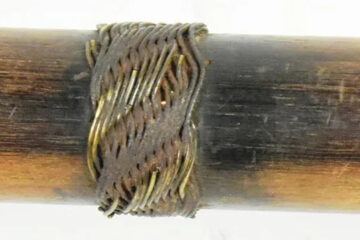
The Binding: Look for the characteristic woven wire or ilala palm binding, which secured the blade’s tang to the shaft; a hallmark of traditional craftsmanship.
Battle-ready examples in this state are exceptionally scarce. The iklwa played a pivotal role in Zulu military history; it is the physical manifestation of a military revolution that transformed Southern Africa in the 19th century. At the Battle of Isandlwana, Zulu forces equipped with short stabbing spears and cowhide shields overwhelmed a British column in a decisive engagement that reshaped perceptions of African warfare.
Why This Piece?
Battle-ready 19th-century iklwas of this quality, retaining their original bindings and broad, formidable blades are increasingly scarce. This is a museum-grade investment piece perfect for serious collectors of African arms, Anglo-Zulu War enthusiasts, or as a centerpiece for high-end interior displays. Enquire about it at HillsCollectibles.com