- Series: Mfecane Series, Masterpiece V
- Origin: KwaZulu-Natal, South Africa
- Period: 19th – Early 20th Century
- Medium: African Hardwood, Copper, and Brass
- Significance: High-Status Executioner/Regimental Weapon
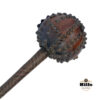
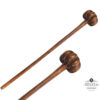
Zulu Executioner’s Knobkerrie (Iwisa) – The Mfecane V
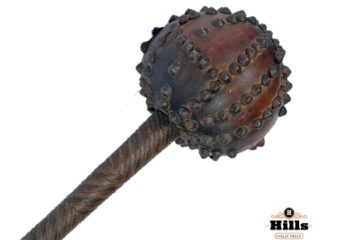
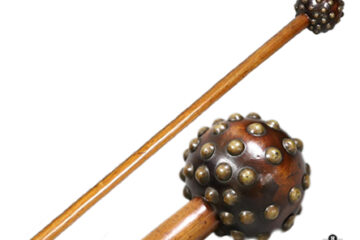
Behold “Mfecane V,” the fifth masterpiece in the legendary Mfecane Series from Hills Collectibles; a formidable 19th-20th century Zulu Executioner’s Knobkerrie (known as iwisa in Zulu), forged from the unyielding heart of dense African hardwood.
This isn’t just a weapon; it’s a thunderous echo of Southern Africa’s most turbulent era, a symbol of raw power, unbridled conquest, and the indomitable spirit of the Zulu nation. Crafted during the shadows of the Mfecane, the “Crushing” a cataclysmic period of warfare, migration, and state-building that reshaped the continent in the early 19th century, this knobkerrie embodies the fierce legacy of legendary King Shaka Zulu, the visionary warrior who revolutionized Nguni warfare.
The Anatomy of Power
The Mfecane V is a masterclass in ethnographic artistry, balancing lethal utility with the prestige of a high-ranking Zulu official.
-
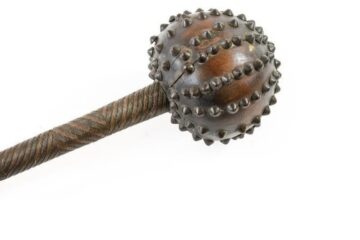
The Striking Head: A massive, perfectly weighted spherical “knob” carved from the dense heartwood of indigenous South African timber. Its proportions are consistent with those historically designated for judicial executions or high-impact frontline combat.
-
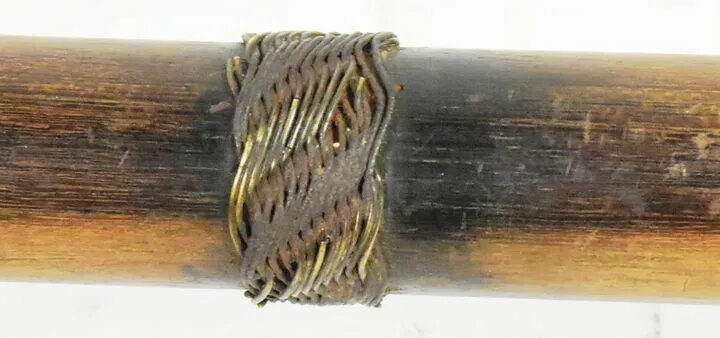
Intricate Wire-work: The throat and mid-shaft are bound in tight, hand-woven copper and brass wire—a traditional embellishment known as imatshaba. This intricate metalwork served as a status symbol, marking the owner as a man of significant wealth and veteran standing within the Amabutho (regiments).
-
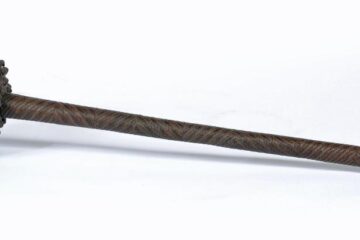
The Shaft: Features a deep, honey-gold patina earned through generations of handling. The wood remains remarkably robust, showing the natural “character” cracks expected of century-old organic artifacts.
Historical Provenance
Sourced from the United Kingdom market, this piece likely entered a private collection during the late Victorian era, a period of intense fascination with the Zulu Kingdom following the Anglo-Zulu War. It represents a direct physical link to the “Crushing,” where the iwisa was not merely a club, but a scepter of the King’s absolute authority.