- Origin: Zulu Kingdom, KwaZulu-Natal region, South Africa, crafted by Zulu artisans renowned for their mastery in weapon-making during the turbulent 19th century.
- Period: 19th century, aligning with the height of Zulu military innovation and the Mfecane era, a time of intense warfare and societal upheaval.
- Provenance: UK Market, verified by ethnographic experts for authenticity and cultural integrity.
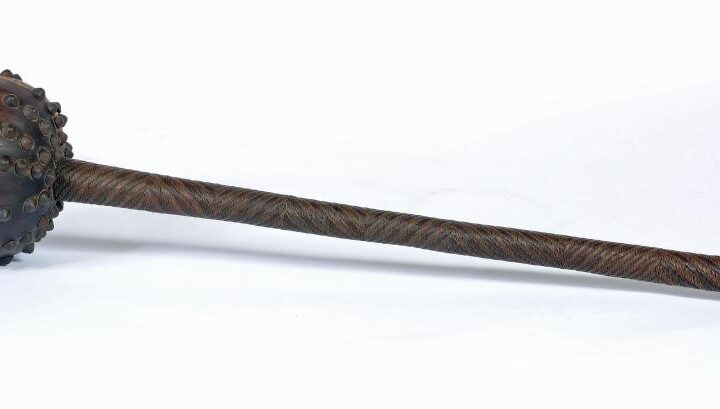
Executioner’s Knobkerrie – Mfecane I: A monumental weapon of state and judicial authority (Mid-19th Century).
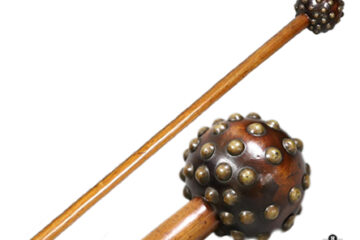
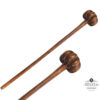
Codenamed “Mfecane I,” this massive Iwisa (knobkerrie) is a formidable relic of the Zulu Kingdom at its zenith. Originating from the mid-19th century—the era of the Mfecane (“The Crushing”), this weapon was not a standard infantry club. Its sheer scale and iron-studded architecture designate it as a specialist tool of an executioner or a high-ranking commander, designed for maximum psychological intimidation and lethal force.
The “Mfecane” series
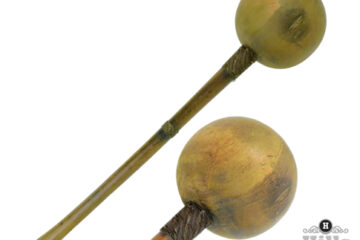
The “Mfecane” series, as seen in comparable listings here (e.g., “Mfecane II” with two-tone hardwood and iron elements, or “Mfecane III” featuring iron star-studs), celebrates these rare executioner’s variants; oversized for intimidation and reserved for high-status individuals. This piece’s gigantic scale and monstrous form amplify its aura of dread, with the precisely placed iron studs evoking a spiked mace from Zulu lore, while the wire-bound handle reflects artisanal expertise in binding techniques that prevented slippage during use. The visible crack, far from a flaw, underscores its antiquity and active history, as such fissures often develop in large hardwood clubs from repeated impacts or climatic changes, serving as a narrative scar of survival through the Mfecane’s turmoil.
Artisanship & Historical Architecture
- The Head: Carved from a single, gargantuan piece of ultra-dense indigenous hardwood (likely Tamboti or Ironwood). The spherical head is meticulously studded with hand-forged, conical iron domes arranged in precise geometric rows.
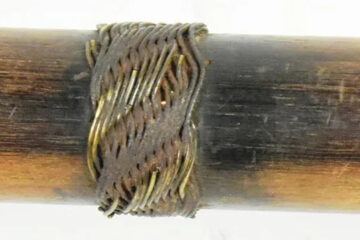
- The Shaft: Features full-length, master-tier herringbone wire-work. This intricate binding, using copper or brass wire, was a hallmark of 19th-century Zulu craftsmanship, providing a non-slip grip while signaling the owner’s elite status.
- The Mfecane Context: This piece embodies the “Crushing” era of Shaka Zulu and his successors—a period defined by the consolidation of power through absolute military and judicial authority.
Authentic Patina & “Life Marks”
- The Narrative Crack: A significant longitudinal fissure runs along the head. For oversized hardwood artifacts of this age, such cracks are not defects; they are essential indicators of the wood’s natural seasoning over 150+ years and the immense stresses of historical use.
- Surface History: The wood possesses a deep, burnished, “mirror-like” patina from generations of handling. The iron studs show a stable, multi-layered oxidation, ranging from blackened iron to deep reddish-brown tones.