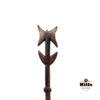
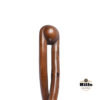
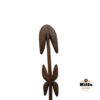
- Origin: KwaZulu-Natal, South Africa.
- Circa: Late 19th Century
- Length: ~63.5 cm (25 in)
- Material: High-density indigenous hardwood (Umsimbiti) with a natural aged patina.
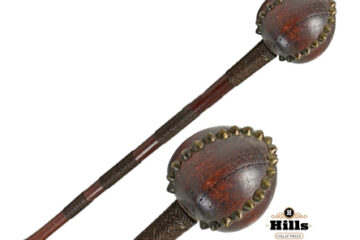
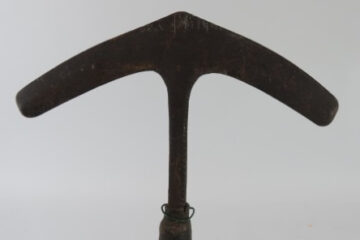
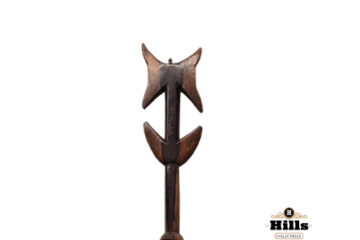
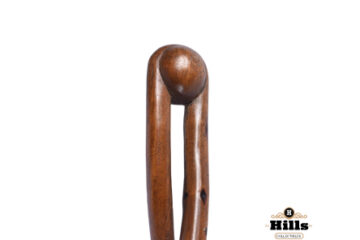
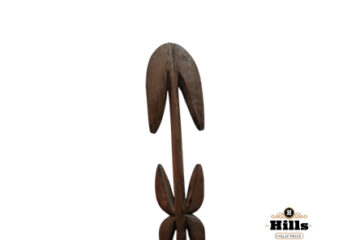
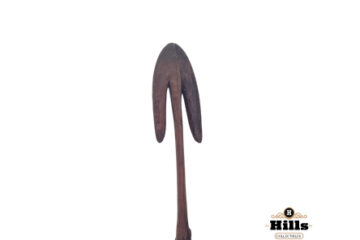
- Distinction: Traditional Zulu-Style Knobkerrie with Integral Studded Detail or Protrusions.
- Condition: Excellent ethnographic condition with no structural cracks.
Provenance: The significance of this piece is heightened by its distinguished provenance, tracing through two of the most respected names in the field of African and Tribal Art:
- The Seymour Lazar Collection (Palm Springs): A legendary collector known for his discerning eye for form, surface, and rarity. His collection was renowned for pieces that showcased the “essence” of a culture’s aesthetic.
- The Norman Hurst Collection (Cambridge, MA): A prominent dealer and scholar whose expertise in African material culture ensured that only pieces of high ethnographic integrity and historical importance were acquired.
- Auction History: featured at Bonhams Fine Art Auctioneers & Valuers
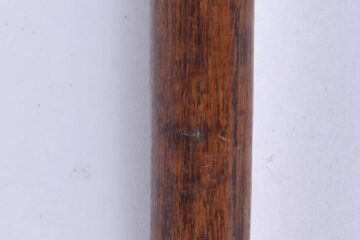
Condition Report: The piece remains in museum-grade condition. The wood is remarkably stable with no major radial cracking. The base of the shaft shows authentic smoothing and minor compression marks consistent with being used as a walking staff of office.
Overview Rare Antique Zulu Knobkerrie
This iwisa is a masterclass in Zulu minimalism, prioritizing pure geometric form and subtle technical complexity. What makes this piece particularly interesting is the “studded” effect on the head. While some examples use metal inlays, these protrusions are meticulously hand-carved from the same solid block of wood. This technique showcases the carver’s skill in maintaining symmetry and adds a rugged, tactile aesthetic to the weapon’s striking head marking it as a high-status object of both tactical utility and symbolic significance.
Materiality & The “Umsimbiti” Luster
Carved from a single piece of exceptionally dense hardwood—likely Umsimbiti (Ironwood)—the piece possesses a heavy, authoritative hand-feel. The surface is characterized by a uniform, obsidian-like patina that has been deepened by decades of ritual polishing with fat and charcoal. The grain is tight and subterranean, revealing itself only under direct light as a series of deep, shimmering chatoyances.
Overall Character: The Warrior’s Minimalist Aesthetic
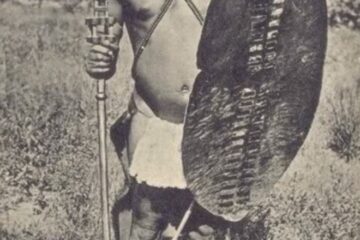
While other knobkerries use wire and beads to signal status, this example communicates power through mass and purity of line. It is a “clean” weapon of prestige, favored by high-ranking individuals who valued the understated elegance of perfectly rendered form. It stands as a silent witness to the Zulu aesthetic of “strength through simplicity.”