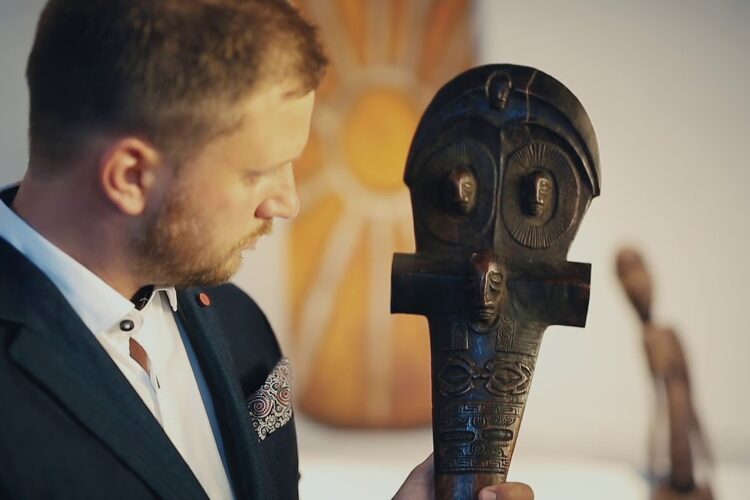

What Auction Houses Seek For in Tribal Art: Understanding Value Beyond the Hammer Price
Why This Matters
Major auction houses do not sell tribal art because it is exotic. They sell it because it meets rigorous standards of authenticity, condition, provenance, and aesthetic coherence. Understanding these standards allows collectors to see value before the catalog does.
This is not about predicting prices. It is about learning how specialists think.
1. Authenticity Is Non-Negotiable
The first question is always: Is it real, and is it right? Specialists look for:
Objects that feel “designed” rather than lived with raise immediate doubts.
2. Patina Tells the Real Story
Patina is not a finish—it is a record. Auction houses favor:
Uniform staining, chemical darkening, or glossy varnish are red flags. Condition is read through honesty, not perfection.
3. Form and Proportion Matter More Than Decoration
Highly decorated does not mean highly valued. Specialists respond to:
This is why certain objects often outperform more ornate pieces they demonstrate mastery through control.
4. Cultural Legibility
Auction houses prioritize objects that are:
Ambiguous or “hybrid” forms can be interesting but they are harder to place, explain, and price.
5. Provenance Builds Confidence
A modest object with strong provenance often outperforms a visually impressive one without it. Preferred provenance includes:
Provenance does not need to be famous. It needs to be credible and continuous.
6. Condition Is Relative, Not Absolute
Cracks, wear, and repairs are not automatic disqualifiers. Auction houses evaluate:
Damage that tells a story can increase value. Damage that interrupts function or form cannot.
7. Market Familiarity (Not Trend-Chasing)
Specialists avoid novelty for novelty’s sake. They prefer:
This is why certain categories such as headrests, stools, shields remain auction staples even as tastes evolve.
8. Aesthetic Resonance Across Cultures
Top-tier objects often transcend their origin without losing specificity.
Auction houses look for pieces that:
This is where tribal art meets global art history.
9. Rarity Through Quality, Not Scarcity
True rarity is not about how few exist—it’s about how few meet the standard. An object is rare when:
High-end auction houses sell outliers, not averages. Outliers create competition. Outliers set records. Outliers attract attention.
10. The Unspoken Test: Would a Museum Want It?
Before a lot is accepted, there is often an unspoken question:
Could this belong in a serious collection?
If the answer is yes, the object is ready for the auction room.
Final Thought: Understand, Innerstand and Overstand
Auction houses do not create value. They recognize it; publicly. The collector’s advantage lies in learning to see earlier.