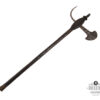
- Type: Shona Scorpion Tail Axe
- Series: “Nehanda II”
- Period: Late 19th – Early 20th C.
- Origin: Shona Peoples – Zambezi Region
- Provenance: UK Market, documented
Shona Ceremonial Scorpion Tail Axe – “Nehanda II”
A premier example of the “Scorpion Tail” series – “Nehanda II”, this prestige axe represents the pinnacle of Shona metalwork and symbolic artistry. Named for its distinctive protruding tang—the “tail”—this series is reserved for the highest levels of Shona ceremonial life. While the Kaguvi-Type series encompasses Shona spears, the Nehanda-Type defines these specialized axes, serving as a tangible link to the ancestral spirits and the legendary history of the Shona peoples.
Series Identifiers: The Scorpion Stricture
To be classified within the “Scorpion Tail” series, a piece must adhere to three strict aesthetic and structural requirements:
- The Scorpion Tail: A long, curved protruding tang that exits the rear of the head, mimicking the defensive posture of a scorpion.
- The Half-Moon Blade: A precision-forged crescent blade designed for visual impact and ritual balance rather than combat.
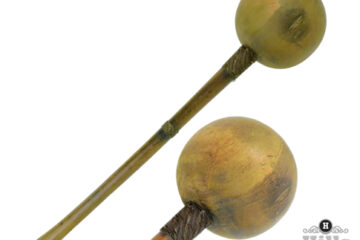
- Makonde Wood Construction: A long, straight handle carved from Makonde wood; a dense, dark hardwood traditionally used by the region’s most skilled carvers.
Master Craftsmanship & Material Depth
The handle of this specimen is a testament to the carver’s mastery over his medium. In the Shona and regional traditions, the selection of wood was never accidental.
- The Two-Tone Effect: Master carvers sometimes deliberately incorporated the lighter sapwood alongside the deep heartwood to create a subtle two-tone effect.
- Symbolic Depth: This technique adds profound visual contrast and symbolic depth to the finished piece, often representing the duality of life—the seen and the unseen, or the transition between the earthly and spiritual realms. This example displays that refined technique beautifully, showcasing a rich interplay of natural wood tones.
Symbolism and the Shona Context
The Incised Tang (Ancestral Language) The tang features traditional incised geometric decorations typical of high-status Shona axes. These are not mere patterns; they are a visual language representing “Zvibvunzo” (questions/ancestral markings). These incisions often symbolize the scales of the pangolin or the “path of the ancestors,” serving to sanctify the axe for ritual use.
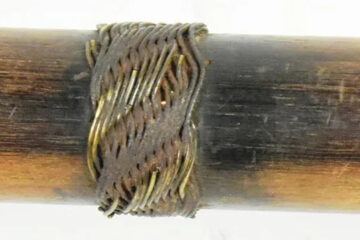
Woven Wire Embellishments This specimen is further embellished with intricate woven copper wire work. In Shona culture, copper was a “red metal” of high value, often associated with the earth’s riches and the heat of the forge. The presence of fine wire-wrapping indicates a piece commissioned for a person of significant spiritual or political stature.
Cultural Roles: Ritual, Status, and Lobola
Ceremonial & Spiritual Use Found across the Zambezi, Zimbabwe area into Mozambique, these axes were central to Bira ceremonies (ancestral rituals), dances, and community gatherings.
Status and Social Contract Beyond the spiritual, the “Scorpion Tail” served two vital social functions:
- Status Symbol: A visual proclamation of wealth and leadership within the village hierarchy.
- Lobola (Bride Price): High-prestige axes were historically presented as part of Lobola negotiations, representing the groom’s ability to protect and provide, while honoring the bride’s family with a masterpiece of craftsmanship.
Collector’s Perspective
The Nehanda-Type “Scorpion” axe is one of the most sought-after forms in African weaponry due to its unique silhouette and the mastery required to balance the heavy iron “tail” with the slender Makonde handle. This is a rare acquisition for serious ethnographic collectors looking for a piece that bridges the gap between functional tool and spiritual icon.