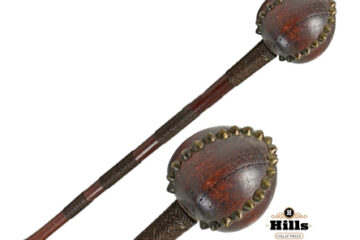
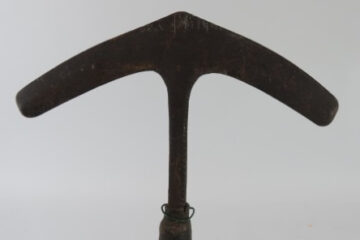
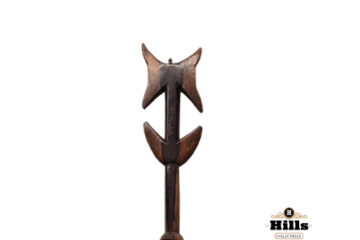
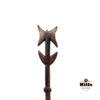
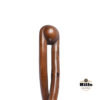
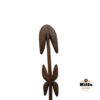
Exceptional Tsonga/Zulu Half-Moon Ceremonial Axe – Late 19th Century
- Type: Tsonga / Zulu (Half-Moon Axe)
- Period: Late 19th Century (Anglo-Zulu War Era, c. 1879–1890s)
- Materials: Hand-forged iron, carved indigenous hardwood, brass and copper alloy wire-binding.
- Provenance: United Kingdom Collection, documented; historically consistent with late 19th-century military bring-backs following the Anglo-Zulu War.
A Museum-Quality Masterwork of Nguni Sculpture
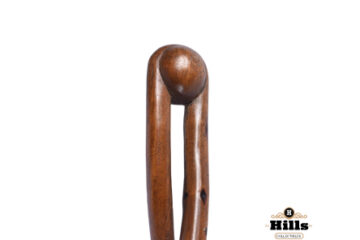
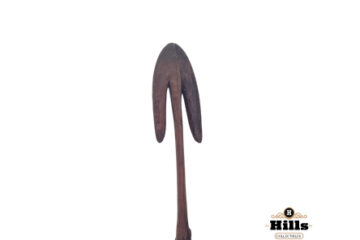
This is not merely a formidable weapon; it is one of the most sculpturally ambitious and aesthetically refined Zulu isizenze to appear on the open market. While the classic Zulu battle axe is celebrated for its clean, minimalist lines, this particular specimen transcends the standard corpus. It features an extraordinary, openwork-carved haft that reflects the sophisticated, cross-cultural artistic dialogues between Zulu carvers and Tsonga-influenced Nguni craftsmen in the late 19th century.
Diagnostic Analysis & Material Culture
The Forged Iron Blade
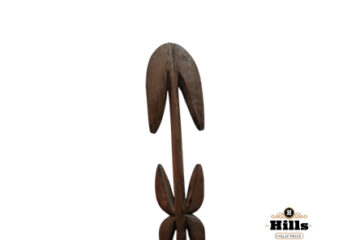
The weapon centers on a massive, hand-forged, semi-circular crescent blade of classic isizenze form, secured to the haft via a robust, square-sectioned tang. The iron surface exhibits a magnificent, stable, dark-grey patina interspersed with subtle, authentic oxidation and vestigial forge-scale marks. The absence of modern grinding or filing marks confirms its traditional blacksmith-forged origin.
The Openwork Haft: A Sculptural Tour de Force
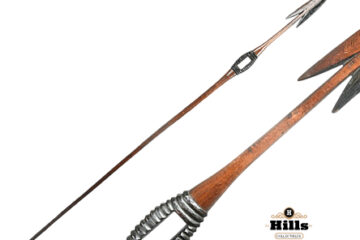
The haft is meticulously sculpted from a single piece of dense, high-grade indigenous hardwood. The definitive highlight of this piece is the upper spine, which features a sequence of four bold, pierced architectural loops (lunette cutouts). This openwork technique—creating a striking, rhythmic interplay of negative space—is a direct stylistic parallel to the prestige carving found on elite Southern African headrests (isigqiki) and snuff containers.
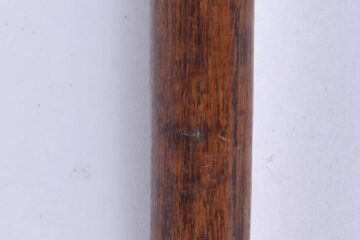
The handle transitions into a classic, subtly flared, bulbous butt. The grip zones are embellished with tightly wound, multi-strand copper alloy and brass wire-binding. The wire shows a beautiful, untouched oxide crust, with minor, localized fraying near the terminal points—clear, diagnostic indicators of genuine age and decades of handling.
Surface, Patina, and Wear Patterns
The wood boasts a deep, dark-chocolate honeyed patina. Decades of ritual handling, application of animal fats, and natural aging have resulted in a complex, two-tone surface: deep, blackened recesses contrasted against glossy, lighter-amber highlights along the raised edges of the openwork loops.
Historical Context & Institutional Parallels
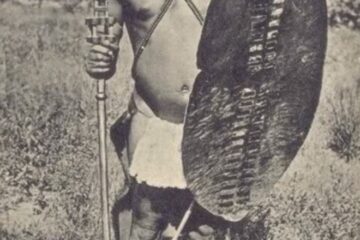
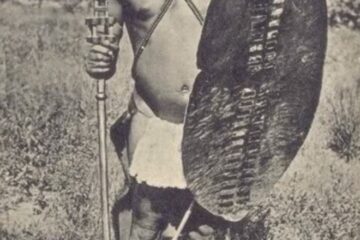
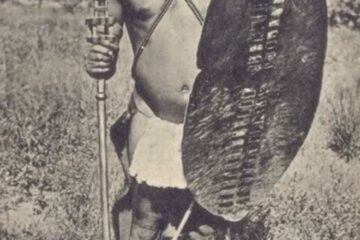
Carried exclusively by izinduna (senior commanders), royal dignitaries, or high-ranking members of the Zulu aristocracy, the isizenze served as a potent emblem of martial prestige, territorial authority, and lineage status within the Zulu Kingdom.
The sculptural treatment of the darkened, relief-carved borders and the specific handling wear on this haft closely mirror the aesthetic conventions seen on institutional 19th-century Nguni artworks.
Comparative Material Culture: The Geometry of Prestige
To appreciate the exceptional form of this isizenze (Zulu battle axe), collectors can look to contemporary late 19th-century Zulu prestige items, such as the rare architectural spoons (izinkezo) documented in foundational institutional collections. A diagnostic parallel is preserved in the British Museum (Museum Number: Af1895,0806.5), acquired from A. Byrne on August 6, 1895.
The British Museum piece features a highly unusual, openwork arched handle described in the original 1895 ledger as being “arched for a third of its length beginning just above the bowl.” This precise “half-moon” negative space mirrors the dynamic, crescent silhouette of the iron blade and the carved hafting elements found on classic isizenze.
Pyro-Engraving and the Amasumpa Aesthetic
A defining characteristic linking these two disparate forms of prestige material culture is the sophisticated use of controlled pyro-engraving. On the British Museum spoon, the artisan utilized traditional localized scorching to contrast the natural pale wood, noting it is “stained burned black on the sides. The edges of the bowl also burned black.” This deliberate application of blackened borders serves the same aesthetic function as the rich, dark patina and geometric relief work seen on the haft of this axe. In southeastern African material culture, the contrasting play between light wood and deeply blackened, high-relief zones (often manifesting as amasumpa warts or geometric ridges) was a visual shorthand for prestige, status, and refined craftsmanship (ubuciko).
The presence of this distinctive arched geometry in a piece collected prior to 1895 provides an invaluable temporal and cultural anchor. It demonstrates that the dramatic “half-moon” negative space and high-contrast scorching were part of a sophisticated, shared design lexicon employed by master Zulu carvers across both domestic prestige items and elite defensive weaponry during the 19th century.
Condition Report & Seller Note
Condition: Exceptional. The hardwood haft is structurally sound with no major splits or structural restorations. The iron blade is firmly seated. Natural, minimal lifting to the antique wire-binding is entirely consistent with 19th-century specimens and validates its untouched state.