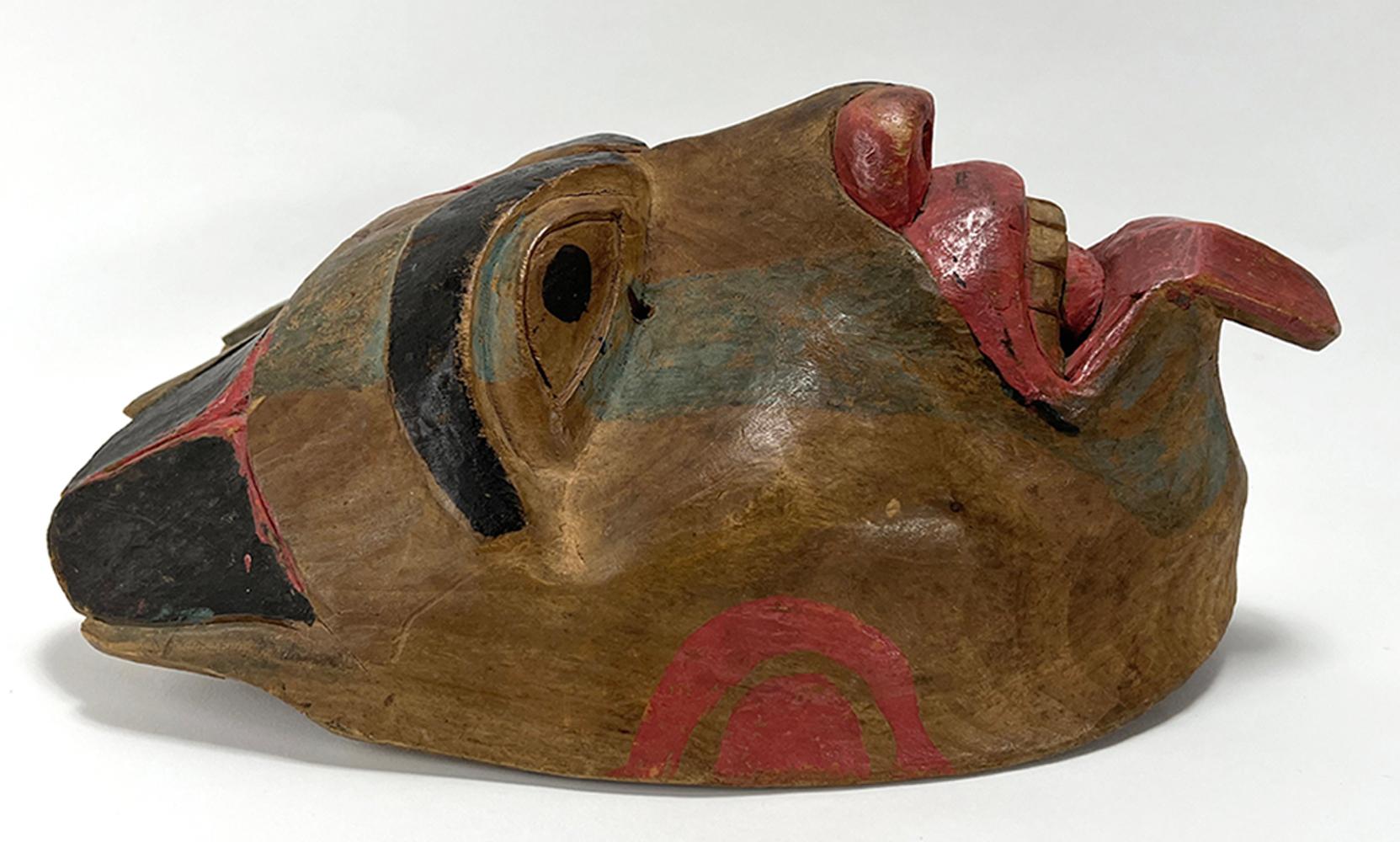
The Hero Artifact Series: Part 3 – The Tlingit Mask (Pacific Northwest Coast)
In the pantheon of tribal masterworks, few objects hold as much concentrated spiritual voltage as the Tlingit shamanic mask. Far from being mere decorative art, these carvings often referred to as yek (spirit) served as essential instruments of transformation for the ixt (shaman) of the Northwest Coast. They remain one of the most revered categories in tribal collecting, prized as much for their profound connection to Tlingit cosmology as for their aesthetic mastery.
Historical Context: The Ixt and the Spirit World
Among the Tlingit people of Southeast Alaska and coastal British Columbia, the shaman was the essential intermediary between the human, natural, and supernatural realms. The ixt was a healer, military advisor, and protector responsible for maintaining the social and spiritual equilibrium of the clan.
Contrary to common Western misconceptions that shamanism was an individual pursuit, it was fundamentally a communal activity. The shaman could not operate in a vacuum; they relied on assistants and the broader clan structure to perform their rites. Masks were not merely worn; they were believed to be conduits through which the shaman transformed into a helping spirit; be it a mosquito, octopus, bear, or ancestor. These masks were active agents, often said to move of their own volition, and were handled only by the shaman’s initiates.
Visual Mastery and Artistry
Tlingit masks are high-water marks of “formline” design a complex, sophisticated graphic system defined by ovoids, U-forms, and S-forms.
- Materiality: Carved primarily from red cedar or alder, the masks were pigments-heavy, utilizing traditional red (ochre), black (charcoal), and blue-green (copper oxides).
- Sensory Depth: Master carvers frequently utilized abalone shell inlays, the iridescent surface mimicking the shimmer of the spirit world; for eyes and teeth.
- Expression: The dramatic, visceral expressions were designed to shock and awe during ceremonies, often paired with rattles and drums to create the percussive soundscape necessary to summon spirits.
Collecting Insights: Provenance and Sensitivity
For the modern collector, the Tlingit mask carries a unique weight. As discussed in expert cultural forums, these objects were often interred at gravesites, meant to remain as spiritual guardians of the deceased ixt.
- Provenance is Everything: Because many early 19th-century masks were removed from their cultural context (often during periods of colonial suppression), documentation regarding their specific clan origin and history of use is invaluable.
- Authenticity: Collectors should look for signs of ritual use such as traces of wear, patina, and historical repairs, which underscore the object’s function as an active tool of the ixt rather than a static display piece.
Highest Auction Results
Tlingit shamanic masks are consistent blue-chip performers in the Northwest Coast market.
- Record Realizations: A rare Tlingit “Mosquito” shaman mask achieved €277,000 (~$365,000–$400,000 USD) at Christie’s Paris in 2011.
- Market Stability: Even mid-tier, well-documented examples consistently realize between $50,000 and $200,000+ at major houses like Sotheby’s and Bonhams. Given the rarity of 19th-century examples, demand continues to outstrip supply for high-quality, authentic pieces.
Scholarly References
- The British Museum: Holds significant pieces, including the medicine shaman’s mask (Am,St.705), documented for ceremonial use.
- Foundational Literature: The works of George Emmons (The Tlingit Indians) remain the gold standard.
- Modern Analysis: Studies by Aldona Jonaitis and exhibition catalogues such as Sacred Circles are essential reading for understanding the intersection of formline artistry and shamanic transformation.
YouTube Deep-Dive: Tlingit Shamanism
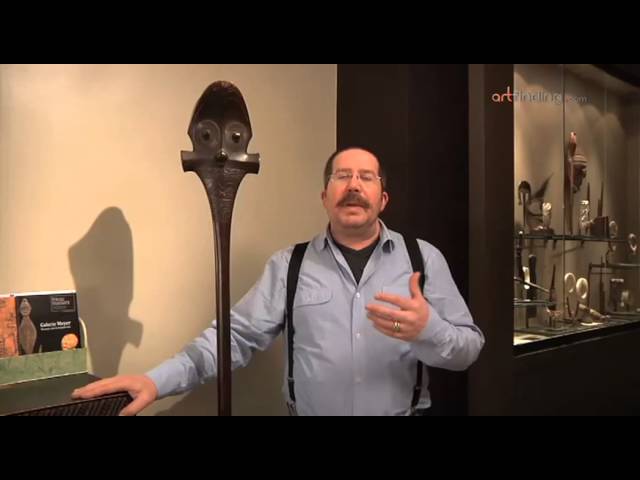
To truly grasp the significance of these masks, it is essential to hear the perspective of those who maintain these traditions. In this insightful lecture, Dr. Rosita Worl explores the complexities of the shamanic complex.
“Tlingit Spirituality and Shamanism in the 21st Century”
Key Takeaways:
- The Communal Shaman: Dr. Worl clarifies that shamanism was a group effort requiring assistants, not an isolated endeavor [26:45].
- The Role of the Mask: The objects were not just representations; they were considered to possess the spirits themselves, serving as physical anchors for the supernatural [38:11].
- Transformation: The shaman used these objects to bridge the gap between the natural world and the spirit world, often to cure illnesses or protect the clan [18:54].
For the collector who values deep cultural history, these masks are not just additions to a collection; they are stewards of a powerful, enduring world view.