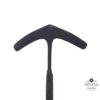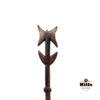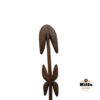

The Zulu Iklwa: Shaka Zulu’s Revolutionary Spear
Throughout the history of African warfare, few weapons embody innovation and power as profoundly as the Iklwa. Building on our previous explorations of Zulu heritage, such as the Iziqu, the Zulu Necklace of Valor, and the InGxotha, a Zulu warrior armband; the Iklwa stands out as a symbol of the Zulu Kingdom’s military prowess. This short stabbing spear, invented by the legendary King Shaka kaSenzangakhona, also known as Shaka Zulu, in the early 19th century, revolutionized combat tactics. It played a pivotal role in shaping one of Southern Africa’s most formidable empires.
A Revolution in Warfare: From Distance to Close Combat
Before Shaka’s reign, warfare among Southern African groups often involved ritualized skirmishes, with warriors hurling light assegais (long throwing spears) from a distance to reduce risk of injury. Shaka identified a critical vulnerability: once a spear was thrown, the warrior was disarmed. His solution was a radical military doctrine emphasizing aggressive, close-quarters combat.
The Anatomy of the Iklwa
The Iklwa was a masterclass in functional design, with every element: blade, tang, binding, shaft, and butt carefully engineered to maximize control, durability, and lethality in close-quarters combat.
The Sound of Victory: The Origin of the Name
The Iklwa’s name adds a layer of cultural intrigue, rooted in Zulu oral traditions. As recounted by historian Ian Knight, “Iklwa” is an onomatopoeic term coined by Shaka himself, imitating the sucking sound (“iklwa”) produced when the wide blade was withdrawn from an opponent’s body. This grimly poetic nomenclature reflects the weapon’s brutal efficiency and the intimate, visceral nature of Zulu combat that underscored the psychological edge it provided.
Take a closer look at an authentic Iklwa in this insightful video from the Clash of Empires Exhibition, featuring historian Ian Knight. In A Zulu Short Stabbing Spear (Iklwa) – Artefact Spotlight, Knight examines a specimen believed to have been used at the Battle of Isandlwana in 1879, where Zulu forces achieved a stunning victory over British troops armed with modern rifles. The video highlights the Iklwa’s pivotal role in that historic clash, showing how traditional tactics and innovation could triumph over colonial firepower.
Tactical Genius: The “Buffalo Horns”
The Iklwa was central to Shaka’s iconic Impondo zankomo (“Buffalo Horns”) formation, named for the shape and encircling maneuver of the army:
Shaka’s reforms extended beyond weapons. He implemented rigorous training, merit-based promotions, and a strict code of conduct, transforming disparate clans into a disciplined and cohesive military machine.
Cultural Significance
Beyond its practical function, the Iklwa carried deep symbolic meaning. It was more than a weapon; it signified status and identity. Many were personalized with carvings or decorative bindings and played a role in rituals honoring ancestors and preparing warriors for combat. In Zulu society where cattle, warfare, and social hierarchy were closely intertwined; the Iklwa represented resilience, innovation, and the shift from localized skirmishes to empire-building. Its influence extended to neighboring groups, reshaping regional warfare during the Mfecane (the “crushing” or scattering of peoples in the early 1800s).
The Legacy of the Mfecane
The Iklwa didn’t just win battles; it reshaped the political landscape of Southern Africa during the Mfecane (the “Crushing”). As Shaka’s influence spread, so too did the technology of the short spear, prompting neighboring groups to reorganize their societies and military strategies. Today, the Iklwa stands as a testament to how a single technological innovation, combined with Shaka’s tactical genius, can alter the course of history.
Leave a comment below and let us know which Zulu artifact we should cover next!